
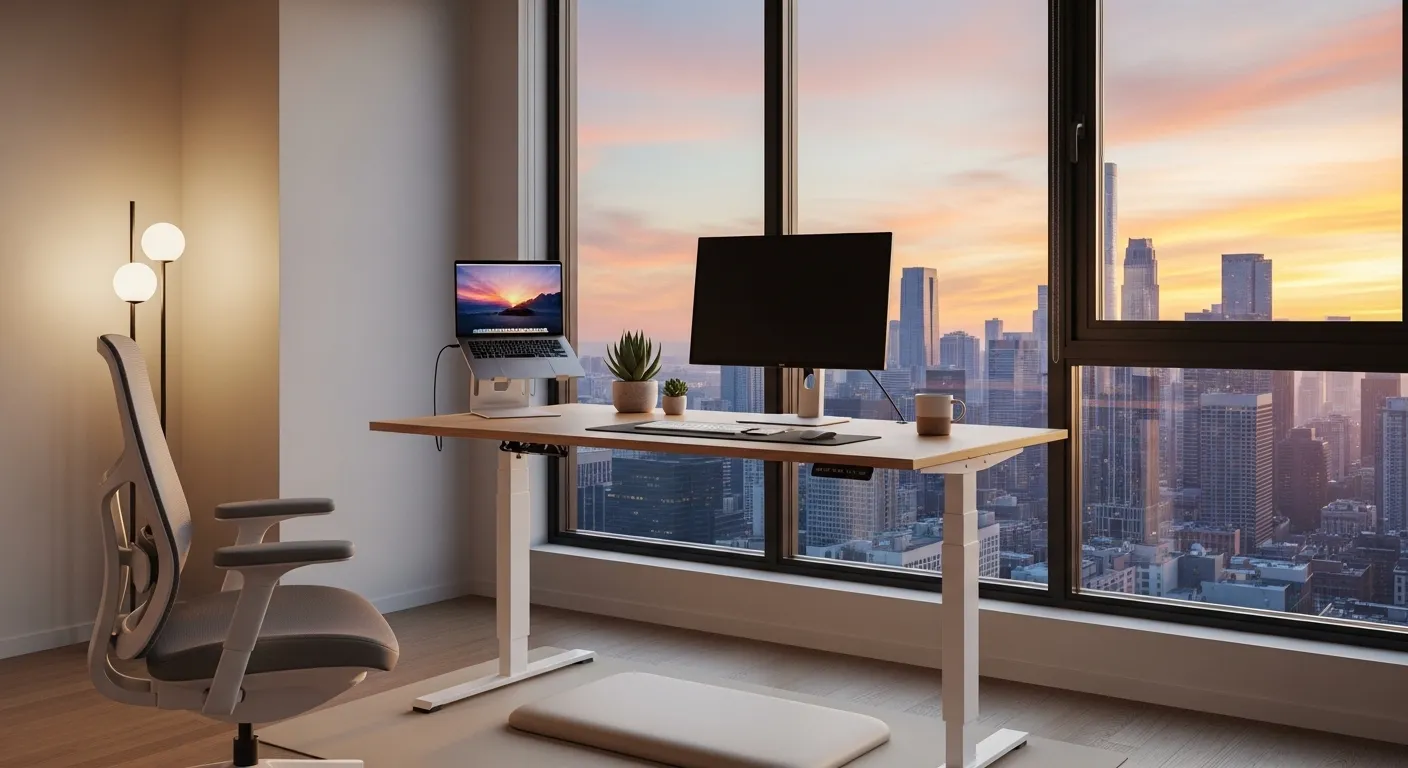
The way people work has changed, and office furniture has had to keep up. A desk is no longer just a fixed surface where you park a laptop for eight hours. In 2026, people expect more flexibility, better comfort, and smarter design. That is exactly why sit-stand desks for hybrid work have become one of the most talked-about workspace upgrades this year.
Whether you work from home full time, split your week between home and the office, or simply want a healthier setup, an adjustable desk can make your workspace feel more modern and more practical. It gives you the option to switch positions, rethink your layout, and build a setup that works with your day instead of against it.
That does not mean every standing desk is worth buying. Some wobble too much. Some look good in photos but feel cheap in daily use. Others have the right features but are far too large for real-world home offices. If you are shopping this year, the smart move is to focus on function first, then style, then extra features.
In this guide, we will break down why sit-stand desks for hybrid work are trending, which features matter most in 2026, how to choose the right one for your setup, and how to avoid the mistakes that leave buyers disappointed.
Why Sit-Stand Desks for Hybrid Work Are Trending in 2026
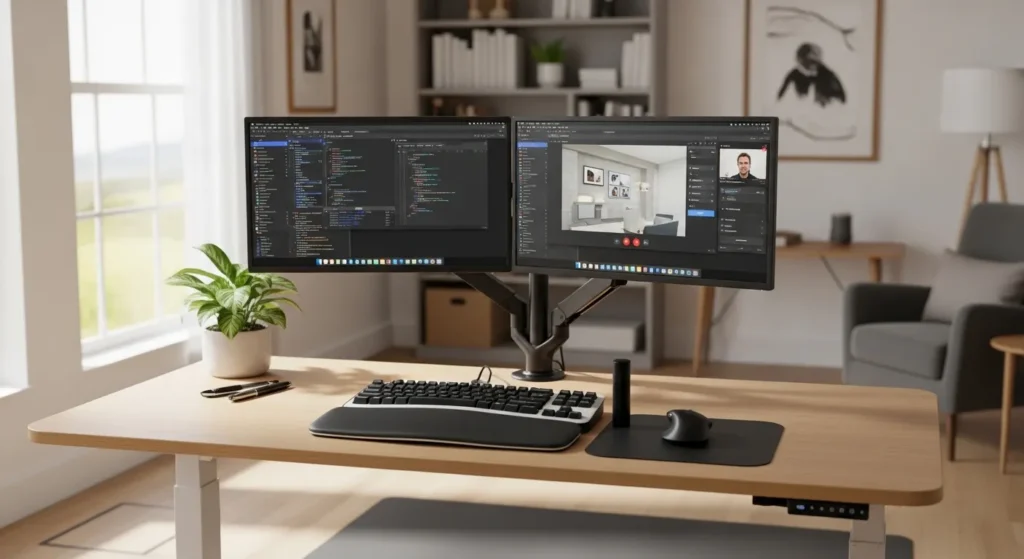
Hybrid work changed what people need from a desk. A traditional fixed-height desk can still work, but many people now want a setup that adapts to video calls, focused solo work, shared spaces, and long computer sessions. That is where adjustable desks stand out. They offer flexibility without forcing you to redesign the entire room.
They also fit the current focus on workplace ergonomics. More people are paying attention to posture, screen height, movement, and comfort during long workdays. A height-adjustable desk gives you more control over those details, especially when paired with the right chair, monitor position, and keyboard placement.
If you are still comparing options, our post on Standing Desks vs. Traditional Desks: What’s Better for You? is a good starting point. It helps frame the bigger decision before you narrow down specific models.
What a Good Sit-Stand Desk Actually Solves
A quality desk does more than move up and down. The best sit-stand desks for hybrid work help solve several common problems at once.
- Static posture: Sitting in one position for too long can make any setup feel uncomfortable. An adjustable desk lets you change positions throughout the day.
- Shared workspaces: If more than one person uses the desk, height memory presets make it much easier to switch users quickly.
- Small-space challenges: Many new models are designed for apartments, compact offices, and multi-use rooms.
- Tech-heavy setups: Better cable management, monitor arms, and accessory compatibility make the desk feel cleaner and more efficient.
- Long-term flexibility: Your needs may change. A more adaptable desk gives you room to evolve your setup without starting over.
If your current workstation still feels off, read Ergonomic Office Chair Setup: A Step-by-Step Guide to Reduce Back and Neck Pain. A desk helps, but chair adjustments and monitor placement matter just as much.
Features That Matter Most in 2026
Not all desks deserve the same attention. Some trendy features are useful, while others are just marketing. Here is what actually matters when buying sit-stand desks for hybrid work in 2026.
1. Stability
This is the big one. A desk can have a sleek top, memory buttons, and a premium finish, but if it shakes every time you type, it will get annoying fast. Stability matters even more if you use dual monitors, a monitor arm, or heavier accessories.
2. Height Range
A wider height range gives you more flexibility. It matters for taller users, shorter users, and shared desks. Make sure the desk can reach a comfortable seated position and a comfortable standing position for your body, not just a generic average.
3. Memory Presets
These save time and make the desk easier to use consistently. Instead of manually adjusting every time, you tap one button and get back to work.
4. Desktop Size
Bigger is not always better. A desktop should fit your actual workflow. For one laptop and one monitor, a compact top may be enough. For dual screens, notebooks, and accessories, you need more surface area. If you work in a tighter room, our guide on Small Office Design Tips to Maximize Space and Efficiency can help you plan around space limitations.
5. Cable Management
Loose cables make an adjustable desk look messy and can become a real hassle when the desk moves. Built-in trays, clips, or under-desk routing channels are worth having.
6. Noise and Speed
A desk does not have to be silent, but it should not sound rough or painfully slow. Smooth motion feels more premium and makes it easier to use the desk naturally throughout the day.
7. Weight Capacity
If you use heavy screens, speakers, or a desktop computer, check the lifting capacity before you buy. A desk that strains under load will not age well.
Best Types of Buyers for Sit-Stand Desks for Hybrid Work
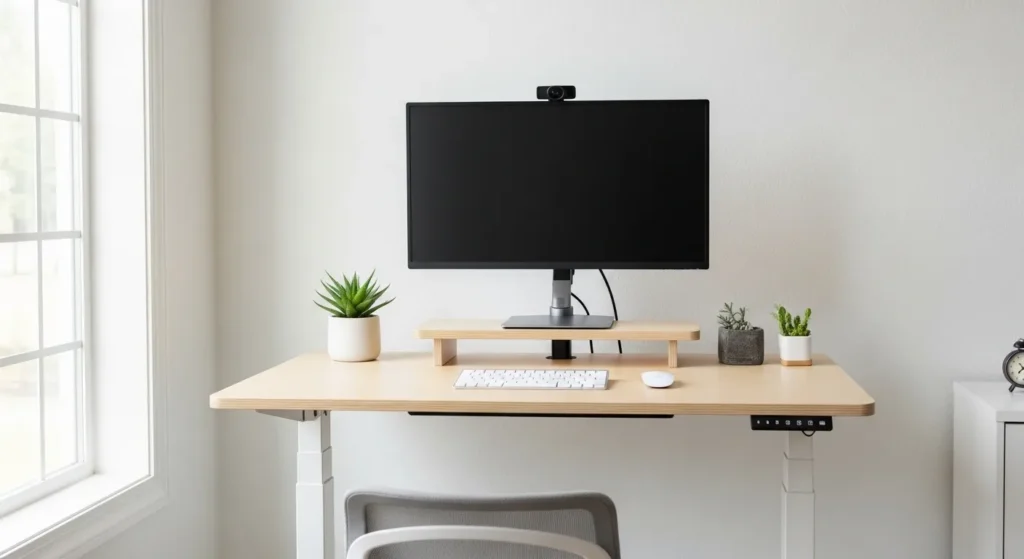
Different users need different setups. The best desk for one person may be a waste of money for someone else.
The Budget Home Office Buyer
If budget matters most, focus on a simple electric frame, a practical surface size, and decent stability. Skip flashy add-ons. Start with the essentials and upgrade accessories later. You can also pair the desk with lower-cost improvements from How to Set Up a Productive Home Office on a Budget.
The Small-Space Worker
Look for compact tops, clean leg designs, and strong cable management. A desk that visually feels light can make a small office seem less cramped.
The Multi-Monitor User
You need a stable frame, enough width, and strong support for monitor arms. This is one case where paying more often makes sense.
The Shared Workspace User
Memory presets matter more here. If multiple people will use the desk, quick transitions make a big difference.
The Style-First Buyer
Design still matters, especially if your office doubles as a visible room in your home. To compare desk aesthetics and layouts, check out Top Office Desk Styles in 2025: Which One Suits You Best?.
How To Set Up a Sit-Stand Desk Correctly
Buying the desk is only half the job. A poor setup can ruin even the best product. For the healthiest setup, your keyboard should sit around elbow height, your monitor should be close to eye level, and your shoulders should stay relaxed instead of hunched.
When standing, do not lock your knees or lean forward toward the screen. Keep the desk height comfortable and let your arms stay natural. When sitting, your feet should feel supported and your back should not lose contact with the chair. A footrest, anti-fatigue mat, or monitor riser may help depending on your layout.
For official workstation guidance, OSHA’s computer workstation resources are worth reviewing, and Mayo Clinic also has a practical office ergonomics guide for screen, keyboard, and chair positioning. OSHA workstation guidance and Mayo Clinic office ergonomics guidance are both strong references.
Common Mistakes Buyers Make
- Buying too cheap: A low price is tempting, but weak motors and unstable frames become frustrating quickly.
- Standing all day: The goal is movement and variety, not replacing one fixed posture with another.
- Ignoring the chair: A sit-stand desk works best with a supportive seated setup too.
- Choosing the wrong size: Oversized desks can dominate small rooms, while undersized ones feel cramped.
- Forgetting accessories: Monitor arms, anti-fatigue mats, and cable trays often make the desk much more usable.
If you want more supporting upgrades beyond the desk itself, browse 10 Ergonomic Office Furniture Ideas for Maximum Comfort. It pairs well with this topic and gives readers a natural next step.
Are Sit-Stand Desks for Hybrid Work Worth It in 2026?
For many people, yes. The best sit-stand desks for hybrid work are no longer niche products. They have become practical tools for modern offices, home workstations, and flexible layouts. The key is buying one that matches your space, your body, and the way you actually work.
If your current setup feels stiff, cluttered, or outdated, a height-adjustable desk can be one of the smartest upgrades you make this year. It will not magically fix every posture issue on its own, but it gives you a stronger foundation for a healthier and more adaptable workspace.
In 2026, the best desk is not simply the one with the most features. It is the one you will use consistently, comfortably, and for years without regretting the purchase. Buy for stability, fit, and real daily use, and you will get much more value from the trend than from the hype.