
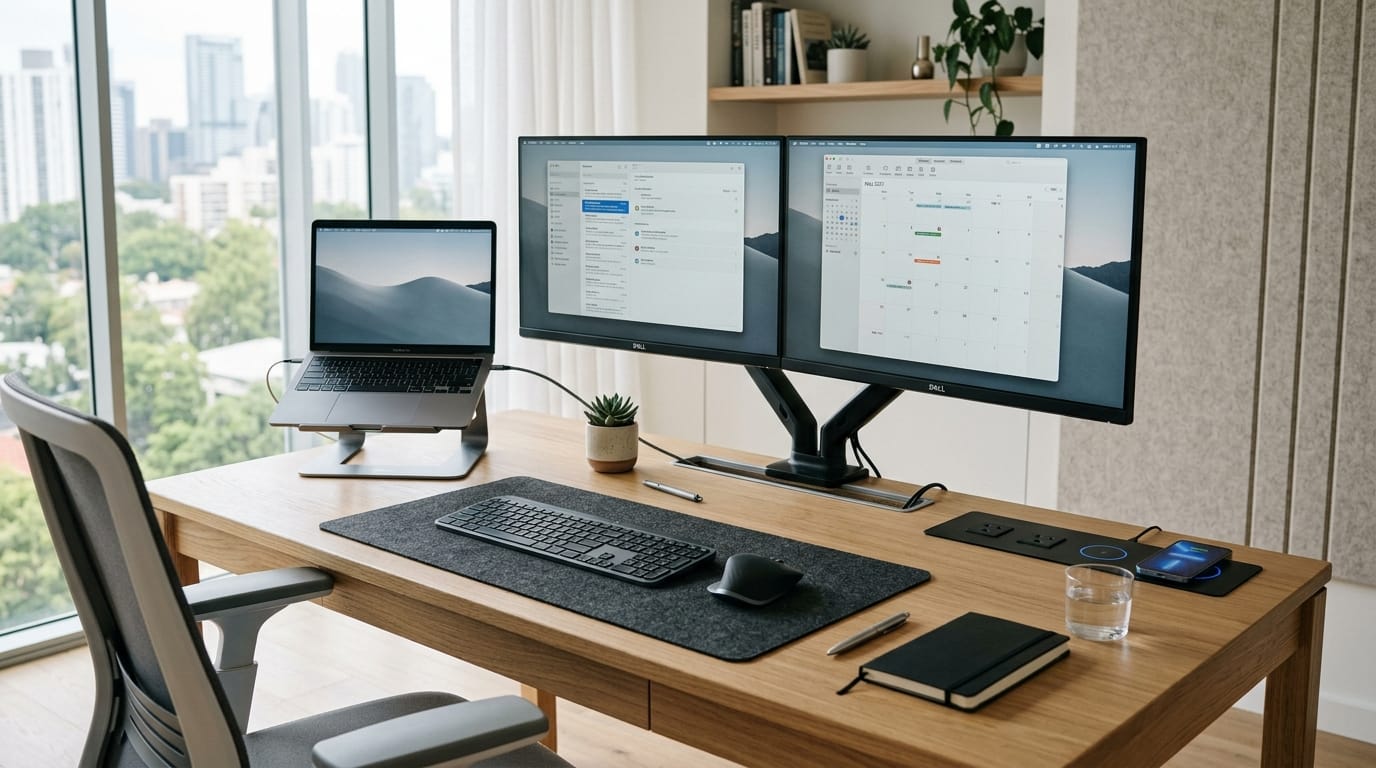
Plug-and-play power furniture is becoming one of the most useful office furniture trends in 2026 because workspaces now depend on more devices than ever. Laptops, monitors, phones, tablets, desk lamps, webcams, microphones, chargers, docking stations, and wireless accessories all need power. Without a smart furniture plan, those tools quickly turn into cable clutter, messy desks, awkward outlets, and unsafe walkways.
Modern work no longer happens in one fixed spot. People move between home offices, shared desks, meeting rooms, lounge areas, coworking spaces, and hybrid workstations. That shift makes power access more important. A beautiful desk fails quickly if someone has to crawl under it to plug in a laptop. A meeting table becomes frustrating if only one person can charge. A flexible office layout loses value if the wiring cannot move with the furniture.
That is why plug-and-play power furniture matters. It brings charging access, cable routing, and technology support directly into desks, tables, pods, benches, and workstations. The goal is simple: make the workspace easier to use without making it look messy.
In 2026, smarter desk setups are not only about style. They are about function, safety, flexibility, and daily comfort. The best office furniture now supports the technology people already use instead of treating power as an afterthought.
Why Plug-and-Play Power Furniture Is Trending in 2026
Plug-and-play power furniture is trending because hybrid work has changed how offices operate. In older office layouts, employees often had assigned desks with permanent wiring. Today, many businesses use shared workstations, flexible seating, meeting zones, and multipurpose rooms. That means furniture must do more than sit in place. It must support movement, technology, and fast setup changes.
This trend connects naturally with AI-Ready Home Office Setup in 2026. AI tools, video calls, cloud work, dual screens, and smarter workflows all increase the need for reliable device access. If the desk cannot support the equipment, productivity suffers.
Power access also affects how clean and professional a workspace feels. Cables stretched across floors, chargers hanging from outlets, and tangled wires behind desks can make even expensive furniture look poorly planned. A cleaner setup helps the room feel more organized, easier to maintain, and safer to use.
Modern desks need to support more devices
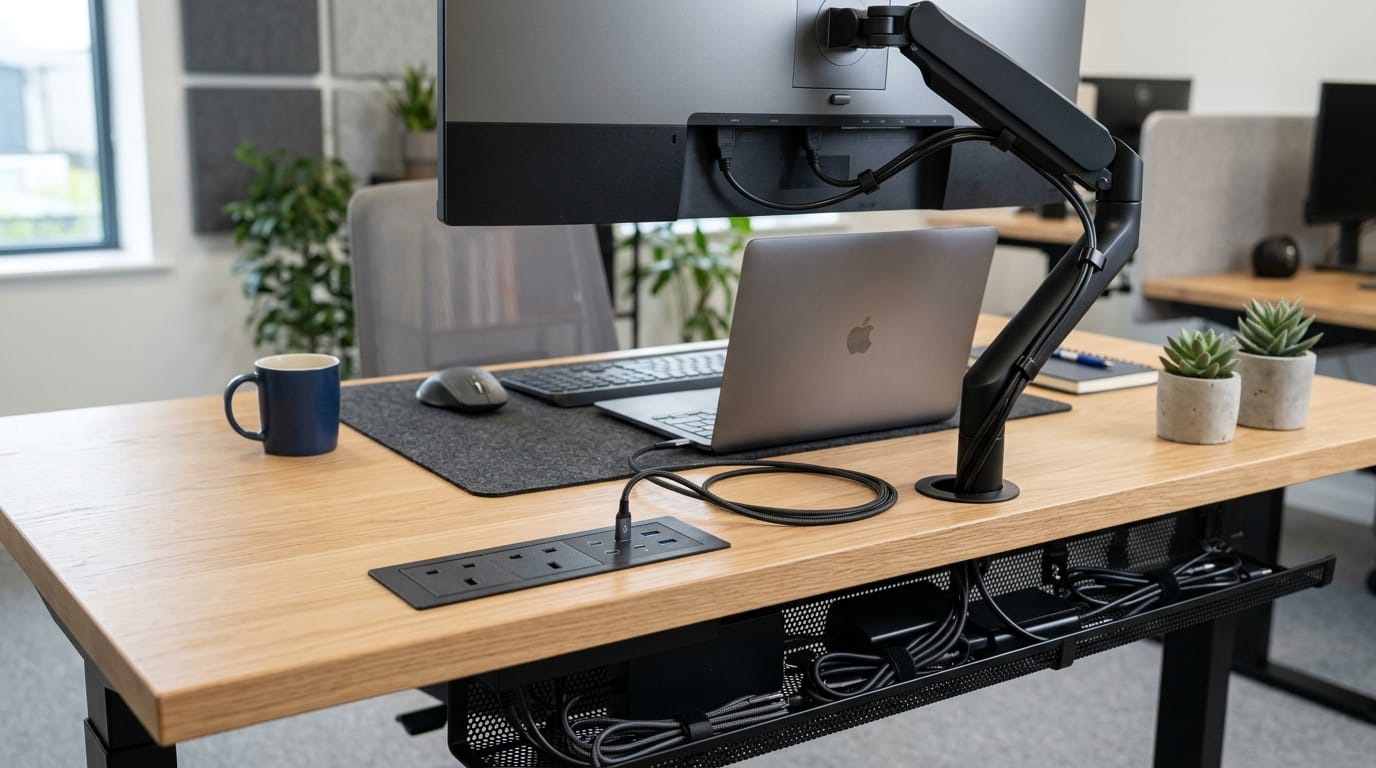
A desk used to support a computer, keyboard, and maybe a phone. Now it may need to support a laptop, second monitor, tablet, headset, camera, phone charger, desk lamp, external drive, speaker, and docking station. Home offices and corporate workstations both face the same problem: more devices need better organization.
Plug-and-play power furniture solves this by placing outlets and charging ports where people actually need them. Some desks include built-in power modules. Others include cable trays, grommets, wireless charging pads, monitor arm access, and concealed cable channels. The best designs reduce friction. Workers should be able to sit down, plug in, and start working without rearranging half the desk.
This is especially helpful for sit-stand setups. When a desk moves up and down, cable length and routing matter. A badly planned cable setup can pull chargers, unplug monitors, or create tension behind the desk. For more guidance on height-adjustable workstations, connect this topic with Sit-Stand Desks for Hybrid Work.
Cable clutter is more than a visual problem
Cable clutter looks bad, but the issue goes deeper than appearance. Loose cables can collect dust, block movement, create tripping hazards, and make cleaning harder. Tangled wires also make troubleshooting frustrating because no one knows which cable belongs to which device.
A cleaner cable plan saves time. It also protects equipment. When cords bend sharply, stretch too far, or get pulled during desk movement, they wear down faster. Good cable management helps the workspace look better while protecting the devices people rely on every day.
Charging access affects how people use the space
People naturally choose work areas that are easy to use. If a lounge chair has no nearby outlet, workers may avoid it for laptop tasks. A meeting table lacks power access, people may arrive with low batteries and leave frustrated. If a shared desk has poor charging options, employees may waste time searching for adapters.
Power access influences behavior. A workspace with convenient charging becomes more useful. A workspace without it may look good in photos but fail during a normal workday.
Flexible offices need furniture that moves with work
Flexible offices depend on furniture that can adapt. Teams may rearrange desks for a project, move tables for training, convert a lounge into a meeting zone, or adjust layouts as staffing changes. Plug-and-play power furniture makes these changes easier because the furniture can support technology without requiring a full electrical redesign every time the layout shifts.
This connects strongly with Modular Office Furniture in 2026. Modular furniture works best when desks, tables, storage, power, and cable routes all support change. If the furniture can move but the cables cannot, the layout is not truly flexible.
Businesses should think about power early in the planning process. Where will people charge laptops? How many devices will a meeting table support? The furniture move? Will employees use monitor arms or docking stations? Will visitors need charging access? These questions help prevent expensive mistakes later.
Meeting rooms need smarter power planning
Meeting rooms often reveal weak power planning first. A table may look clean, but once people bring laptops, phones, HDMI adapters, chargers, and video call equipment, the room can become messy fast. Built-in table power, cable cubbies, under-table trays, and floor box planning can keep meetings cleaner and easier to run.
Small meeting rooms need this just as much as large boardrooms. In hybrid work, even a quick meeting may include screen sharing, video calls, note-taking, and device charging. Power furniture supports that reality instead of pretending people only need chairs and a surface.
How to Choose Smarter Desk Setups Without Creating New Problems

Choosing plug-and-play power furniture requires more than buying a desk with outlets. The setup has to match how people work. A home office, shared workstation, private office, training room, and conference table all need different power plans. The best solution starts with daily behavior.
Look at how many devices people use. Notice where cables pile up. Check whether chargers reach comfortably. Watch how employees move through the room. Ask whether people avoid certain work areas because power access is poor. These small observations help you choose furniture that solves the actual problem.
Safety and ergonomics also matter. OSHA explains that ergonomics means fitting the job to the person, which can help reduce muscle fatigue and work-related musculoskeletal problems. Furniture with better cable placement, monitor support, and reachable power access can support that goal when combined with good workstation setup. You can learn more from OSHA’s ergonomics overview.
Plan for power, ergonomics, acoustics, and sustainability together
A smart desk setup should not treat power as a separate feature. It should support the full work experience. Good cable routing can reduce clutter. Correct monitor placement can reduce neck strain. Better acoustic planning can reduce distraction. Durable, repairable furniture can reduce waste.
This is where office planning becomes more strategic. Power furniture should support ergonomics by placing devices where people can reach them without twisting, crawling, or stretching. Cable trays should keep cords away from feet. Monitor arms should have clean cable paths. Charging ports should sit close enough for daily use without crowding the work surface.
Acoustic planning also matters. A clean desk setup will not solve a noisy office. If the workspace includes shared desks, video calls, or open collaboration areas, pair cable management with Acoustic Office Solutions 2026. Power access and sound control work together because modern work often includes calls, recordings, and online meetings.
Do not ignore repair, replacement, and future upgrades
Some power furniture looks impressive at first but becomes frustrating when one part fails. Before buying, ask practical questions. Can the power module be replaced? Are the ports standard or proprietary? Can cables be accessed for maintenance? Does the desk support new devices later? Will the furniture still work if the team changes equipment?
This also connects with Circular Office Furniture in 2026. Furniture that can be repaired, refreshed, rewired, or reconfigured usually offers better long-term value than pieces that become useless when one built-in component breaks.
For home offices, the same idea applies. Choose desks and accessories that can grow with your setup. A simple desk with a high-quality cable tray, clamp-on power strip, monitor arm, and clean charging station may work better than a flashy desk with limited upgrade options.
For business offices, standardization helps. If every workstation uses a different charging setup, maintenance becomes harder. Choose consistent power modules, cable paths, and desk accessories where possible. Employees should not need a different adapter for every room.
Plug-and-play power furniture is not about adding technology for the sake of it. It is about removing friction from the workday. When people can charge devices easily, keep desks clean, move between work zones, and avoid cable mess, the workspace feels more professional and less stressful.
The best 2026 desk setups will combine practical power access with ergonomic comfort, flexible layouts, acoustic support, and durable materials. A desk should not only look modern. It should make modern work easier.
Start with the areas that cause the most frustration. Fix the tangled cables behind the desk. Add charging access to the meeting table. Create cleaner cable routes for sit-stand workstations. Choose modular furniture that can move without creating wiring problems. Upgrade home office power access so devices stay organized instead of scattered across the room.
Plug-and-play power furniture may seem like a small office upgrade, but it changes how people use the space every day. In 2026, the smartest workspaces will not hide from technology. They will build it neatly, safely, and flexibly into the furniture people already use.