
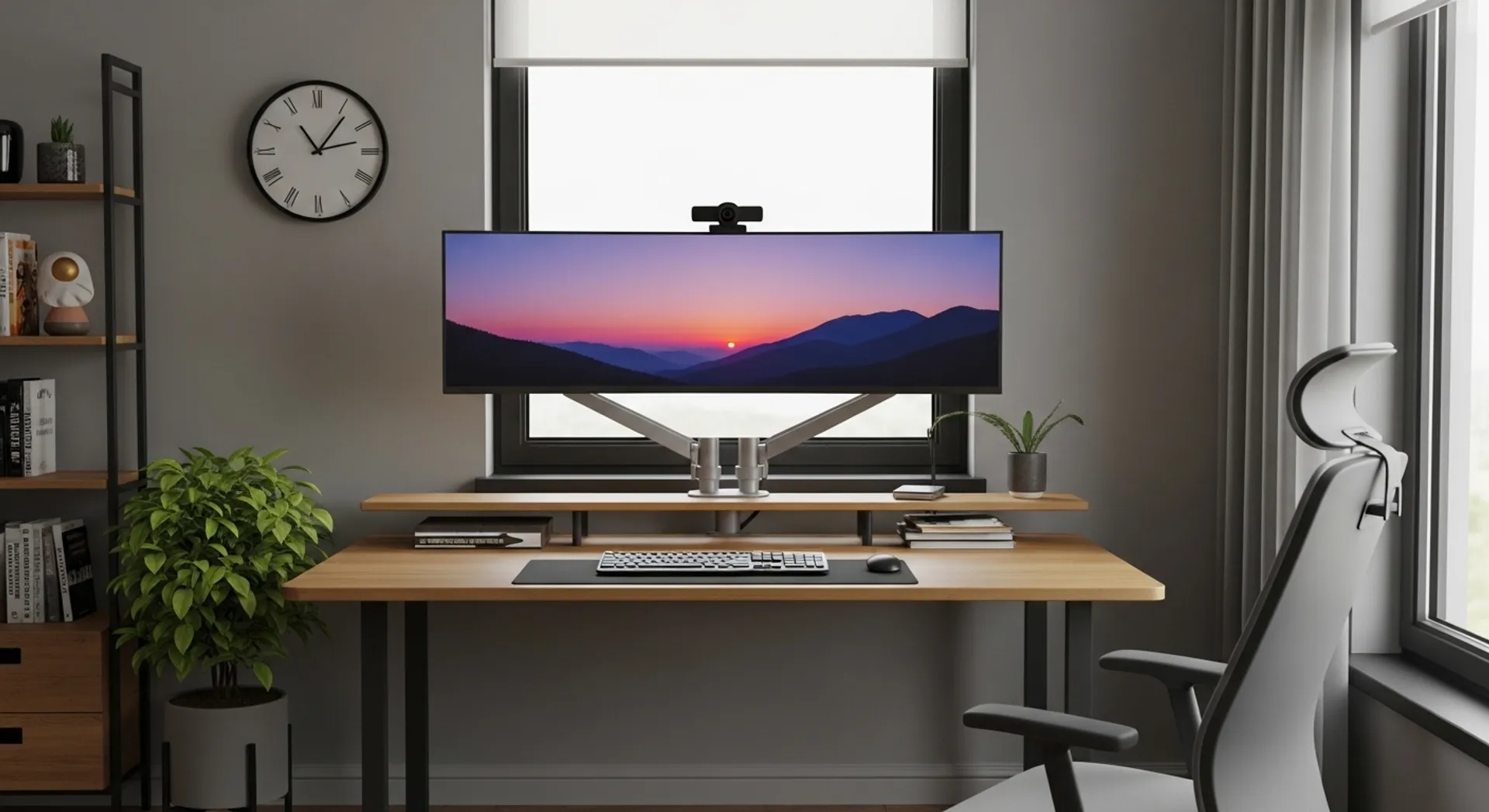
The home office is changing again in 2026. It is no longer just a desk, a chair, and a laptop pushed into a spare corner. More people now work across multiple windows, AI tools, messaging apps, video calls, research tabs, dashboards, and second screens all at the same time. That shift is changing what a functional workspace actually needs.
An AI-ready home office is not about chasing hype. It is about building a setup that can handle modern digital work without wrecking your posture, focus, or energy. As AI becomes more integrated into daily workflows, the physical consequences are obvious: longer screen sessions, more device switching, more accessories, more charging needs, and greater pressure on your desk layout and ergonomics.
That is why a 2026 home office setup has to do more than look clean in photos. It has to support real work. The best setup now blends ergonomic comfort, monitor positioning, cable control, power access, and enough flexibility to keep up with changing work habits.
If your current workspace feels cluttered, tiring, or outdated, this is where to start. You do not need a full renovation. But you do need a smarter setup.
Why AI-ready workspaces are becoming a real trend
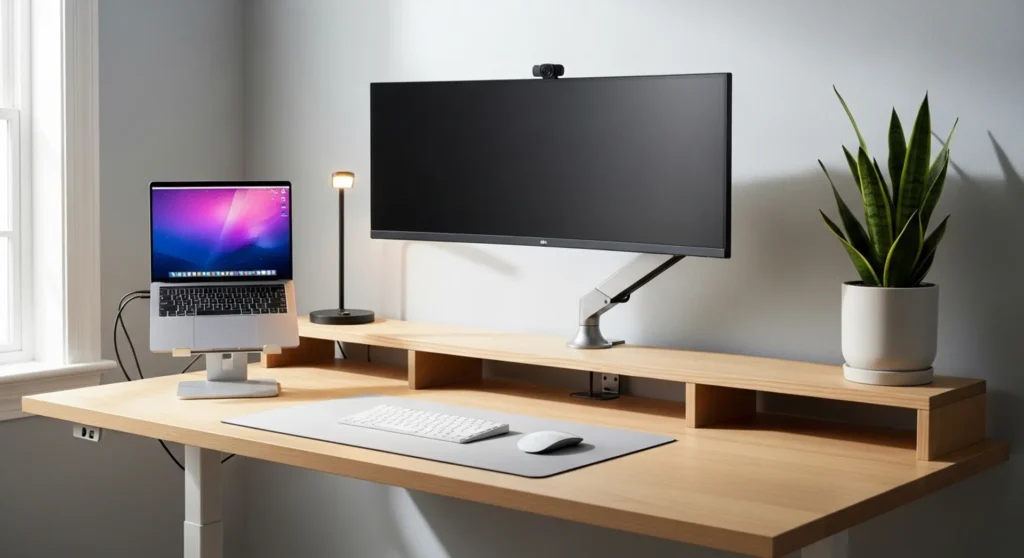
Office design and furniture trend coverage in 2026 keeps pointing to the same shift: workspaces now need to support hybrid work, digital intensity, smarter technology use, and human comfort at the same time. AI is part of that change because it increases the amount of time people spend reading, reviewing, drafting, editing, comparing, and managing information across screens.
In practical terms, that means many people now need more from their workspace than they did a few years ago. A tiny desk, poor monitor placement, weak lighting, and bad cable management can start feeling much worse when your daily workflow becomes more screen-heavy and more mentally demanding.
AI work means more screen interaction
Even if you are not a full-time technical worker, AI tools often add more tabs, more prompts, more side-by-side reviewing, and more multitasking. That creates more visual demand and more time spent at the desk.
Modern workflows need better furniture support
As desks become command centers for laptops, monitors, microphones, webcams, chargers, task lights, and accessories, furniture has to work harder too. A desk is no longer just a surface. It is part of the operating system of your workday.
That is why simple ergonomic upgrades matter more now
You do not need a futuristic office pod to make your setup better. Often the biggest improvements come from getting the basics right: correct monitor height, enough desk depth, a supportive chair, fewer awkward reaches, and a layout that keeps important tools within easy reach.
What an AI-ready desk setup should include
A better desk setup starts with function, not aesthetics. Good design still matters, but comfort and usability should lead the decisions.
A desk with enough usable depth
If your monitor is too close to your face because the desk is too shallow, your neck and eyes will feel it. A deeper desk gives you more comfortable viewing distance, better keyboard positioning, and extra space for notebooks, accessories, and cable routing.
Reliable cable and power management
More devices mean more clutter unless the setup is designed to handle them. Built-in cable channels, under-desk trays, power access, and simple routing solutions help keep the workspace usable instead of chaotic.
Flexibility for one or two monitors
Many home workers now switch between laptop-only, laptop-plus-monitor, or dual-screen setups depending on the day. Your desk should be able to support that without forcing awkward posture.
Stability matters more than people think
A shaky desk gets annoying fast, especially during typing, calls, or monitor use. In an AI-heavy workflow where you are constantly interacting with screens and peripherals, a stable desk makes the whole setup feel more solid and less distracting.
Why monitor placement is still one of the biggest ergonomic issues
People spend money on desks and chairs, then ruin the setup with a poorly placed monitor. That is still one of the most common workstation mistakes. Proper monitor placement helps reduce awkward posture, glare, eye strain, and neck tension.
Monitor height affects your neck and upper back
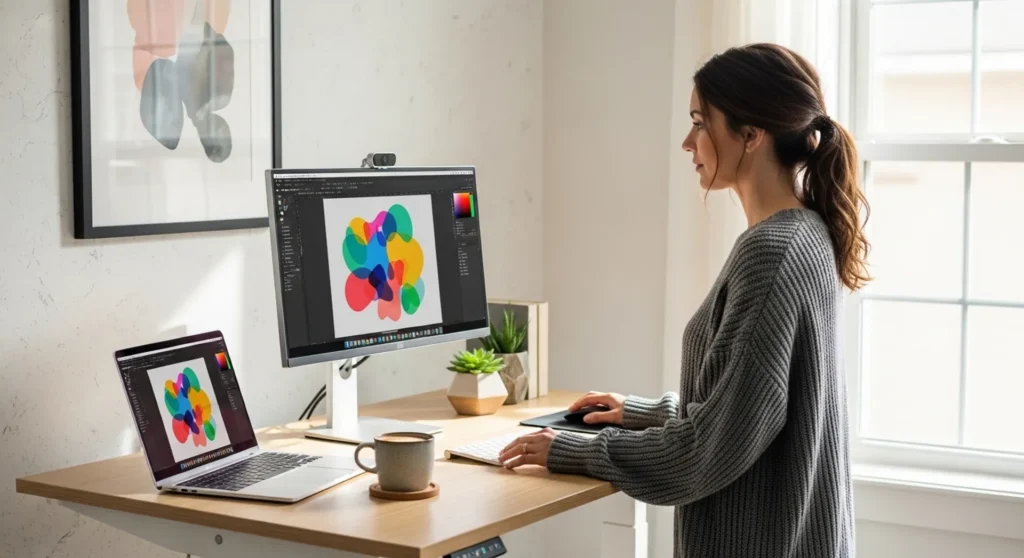
If the screen sits too low, you tend to bend your neck down. If it is too high, you may tip your head back or strain your eyes. A better setup keeps the display at a comfortable viewing level so you can work in a more neutral posture.
Monitor distance changes visual comfort
If the screen is too close, your eyes work harder and your posture often collapses forward. If it is too far, you may lean in unconsciously. Desk depth and monitor placement need to work together.
Glare makes a good setup feel bad
Even a premium monitor can become tiring if it is placed in the wrong lighting conditions. Window glare and overhead brightness can quietly wreck comfort during long work sessions.
A monitor arm can solve more than one problem
A monitor arm frees up desk space, improves height adjustment, and makes it easier to fine-tune viewing angle and distance. It is one of the most practical upgrades for people using external displays every day.
How to make your chair and desk work together
A chair and desk should function as one system. If one is wrong, the other has to compensate. That is where discomfort starts creeping in.
Your chair should support neutral sitting
A good chair should help you sit with proper lower-back support, relaxed shoulders, and feet supported by the floor or a footrest. If the chair is too low, too high, or poorly shaped, the desk setup becomes harder to fix.
Desk height needs to match your actual working position
People often try to fit themselves to the furniture instead of adjusting the furniture to them. Your elbows, wrists, and shoulders should feel supported during normal typing and mousing, not forced upward or dropped too low.
Sit-stand setups can help when used properly
Height-adjustable desks remain relevant because they let you vary posture during the day. That does not mean standing all day is the goal. The real value is movement variety.
The best setup supports movement, not one perfect posture
There is no single magic position you should hold for eight hours straight. The better goal is a workspace that makes it easy to shift, stand, sit, reset, and keep working without building unnecessary strain.
The small upgrades that make the biggest difference
Not every improvement has to be expensive. A few targeted changes can noticeably improve your daily comfort and productivity.
Add a monitor riser or arm
If your screen is too low, this is one of the fastest fixes available. It improves posture and often creates more usable surface area below the display.
Use a separate keyboard and mouse with a laptop setup
Working directly on a laptop for long periods usually forces compromises in screen height, wrist position, or both. External input devices let you position the screen more correctly.
Improve your task lighting
Good office lighting reduces fatigue and helps your screen setup feel more comfortable. This matters even more when you are reading, editing, and reviewing content for long stretches.
Declutter the reach zone
The things you use constantly should be easy to reach without twisting, stretching, or stacking items awkwardly. Cleaner reach zones make the workspace feel calmer and more efficient.
How this topic fits your site
This topic works well for Compulsive Painball because it builds directly on your current content instead of repeating it. It connects naturally to your recent post on Ergonomic Office Chair Setup: A Step-by-Step Guide to Reduce Back and Neck Pain, your article on Office Lighting Tips to Improve Focus and Reduce Fatigue, your standing desk comparison at Standing Desks vs Traditional Desks: Pros and Cons Explained, and your design-oriented guide at Top Office Desk Styles in 2025 for Every Workspace.
It also gives you room to internally link to newer trend content like acoustic planning and sit-stand desks, which helps turn the site into a stronger workspace cluster instead of a collection of separate articles.
Final thoughts
An AI-ready home office in 2026 does not need to look futuristic. It needs to work better. That means giving your screens the right position, giving your body better support, and giving your desk enough structure to handle the way modern work actually happens.
If your workspace feels cramped, distracting, or physically draining, the answer is usually not more gadgets. It is a better layout. Start with monitor position, desk depth, chair support, and lighting. Then add the accessories that make daily work smoother.
The result is not just a nicer-looking office. It is a setup that helps you stay focused longer, feel less beat up at the end of the day, and handle modern AI-heavy workflows with less friction.
For broader guidance, readers can also review Microsoft’s Work Trend Index, OSHA’s Computer Workstations eTool, and OSHA’s specific guidance on monitor placement.