
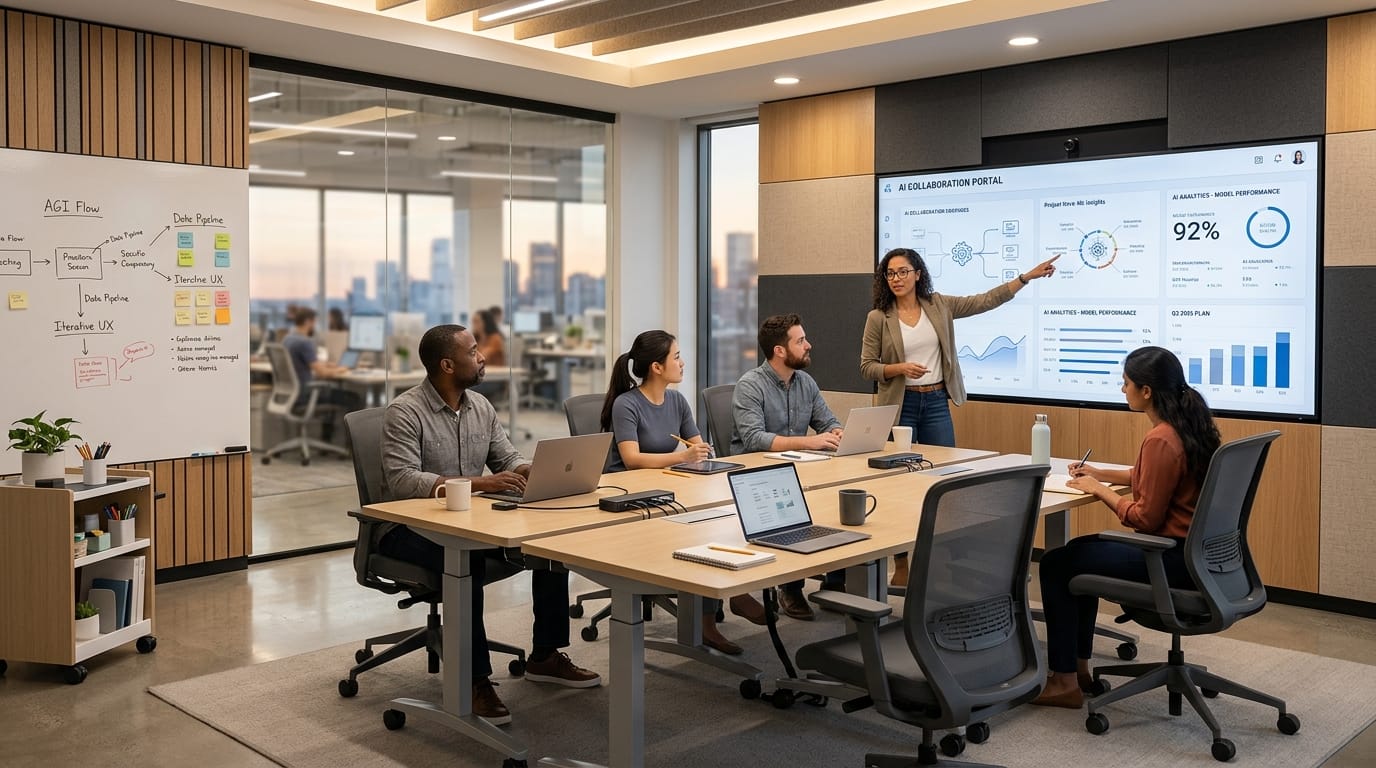
AI collaboration rooms are becoming an important part of modern workplace design because teams are no longer using technology only for video calls, emails, and shared documents. In 2026, many offices are starting to think about how artificial intelligence fits into brainstorming, project planning, research, client presentations, design reviews, meeting summaries, and team decision-making. That shift changes what a good meeting room needs.
The old conference room was usually simple: one long table, several chairs, a screen, and maybe a whiteboard. That setup still works for some meetings, but it does not always support the way teams now work. Modern teams may need to review AI-generated summaries, compare documents, test prompts, check dashboards, collaborate with remote coworkers, and move between focused thinking and group discussion. A static room with poor lighting, bad acoustics, tangled cables, and uncomfortable chairs can slow everything down.
The good news is that an AI-ready workspace does not need to look like a science fiction movie. The best AI collaboration rooms are human-centered first. They make people more comfortable, more focused, and better able to work together. The furniture should support posture, visibility, movement, privacy, and flexible use. The technology should feel integrated, not forced.
Why AI Collaboration Rooms Are Trending in 2026
AI is changing how office teams handle information. Employees may use AI to summarize long documents, organize meeting notes, draft ideas, compare options, analyze customer feedback, or prepare presentations. That means collaboration rooms need to support both people and digital workflows. The room has to work for conversation, screen sharing, note taking, quiet review, creative thinking, and hybrid participation.
This is different from a standard meeting room. A traditional room often assumes everyone sits in one place and looks in one direction. An AI collaboration room should be more flexible. A team may start with a quick standing discussion, sit down for research, move to a whiteboard, split into smaller groups, then return to a screen to review options. Furniture should make those transitions easy.
This trend also connects with the bigger movement toward flexible offices. Many businesses no longer want fixed layouts that only do one thing. They want spaces that can shift from team planning to training, from client calls to internal workshops, and from brainstorming to quiet focus. For more on that idea, see Flexible Office Furniture for Hybrid Work and Modular Office Furniture in 2026.
What Makes an AI Collaboration Room Different?

An AI collaboration room is not defined by one piece of software. It is defined by how the room supports digital teamwork. The space should help people share screens clearly, hear one another, stay comfortable during longer sessions, and switch between tools without friction. That means the furniture layout matters as much as the technology.
Start with the table. A good collaboration table should have enough surface space for laptops, notebooks, water bottles, and shared materials. It should also include cable access or nearby charging so people are not crawling under furniture to find outlets. Rounded or soft-edge tables can make discussion feel more natural than stiff boardroom layouts, especially for creative work.
Seating matters too. If people are expected to spend long sessions reviewing information, chairs need proper support. Adjustable task chairs or comfortable conference seating can reduce fatigue. When workers are uncomfortable, they shift constantly, lose focus, and leave meetings drained.
Furniture Should Reduce Friction
The best test for an AI collaboration room is simple: does the furniture make work easier or harder? If people cannot reach power, see the screen, hear the speaker, move their chair, or place their laptop comfortably, the room is not ready. Good furniture removes small frustrations before they interrupt the meeting.
Key Furniture Pieces for AI-Ready Teamwork
The most useful AI collaboration rooms usually combine flexible tables, ergonomic seating, mobile boards, display-friendly layouts, acoustic treatments, and storage. Each piece should have a reason. The goal is not to fill the room with trendy furniture. The goal is to create a space where teams can think clearly and work smoothly.
Flexible tables are a smart starting point. Modular tables can be rearranged for workshops, small groups, client presentations, or focused work. Tables with integrated cable management help keep the space clean. Mobile tables are useful for teams that often change room layouts. If the room is small, nesting tables can help free up floor space when needed.
Ergonomic chairs are just as important. Chairs should support the lower back, allow movement, and fit different body types. A beautiful chair that becomes uncomfortable after 20 minutes is not a good investment. For more setup guidance, connect this topic to Ergonomic Office Chair Setup.
Mobile whiteboards and pinboards can support brainstorming better than a screen alone. AI can generate ideas quickly, but people still need space to question, organize, edit, and connect those ideas. A room with only digital displays may feel efficient but not always creative. Physical boards keep thinking visible and help teams avoid losing good ideas in browser tabs.
Do Not Forget Storage and Cable Control
Messy rooms create mental clutter. Add storage for adapters, markers, remotes, chargers, cleaning cloths, and shared materials. Use cable trays, grommets, floor boxes, or charging stations to keep wires controlled. A clean AI collaboration room feels more professional and helps the technology disappear into the workflow.
Acoustics, Lighting, and Screen Placement Matter
Office furniture is not only about chairs and desks. The full room experience affects focus. AI collaboration often includes speaking, listening, reviewing text, reading screens, and making decisions. Poor acoustics or lighting can make those tasks harder.
Acoustic panels, rugs, upholstered seating, curtains, and soft finishes can reduce echo. This matters in hybrid meetings because microphones pick up room noise. A beautiful space with bad sound can still feel stressful. If your office already struggles with noise, see Acoustic Office Solutions 2026.
Lighting should support both screens and people. Avoid glare directly behind monitors or displays. Use layered lighting when possible, including general lighting, task lighting, and softer ambient lighting. A room used for long AI-assisted sessions should not feel like a harsh interrogation space. It should feel alert, calm, and professional.
Screen placement also needs planning. Everyone should be able to view the main display without twisting their neck for long periods. If the room supports remote meetings, the camera should capture participants naturally. Screens should not be placed so high that people constantly look upward. OSHA’s workstation guidance recommends monitor placement that keeps the head and neck balanced, with the top of the monitor at or just below eye level. That same principle can guide meeting-room screen comfort.
Design for Human Attention, Not Just Technology
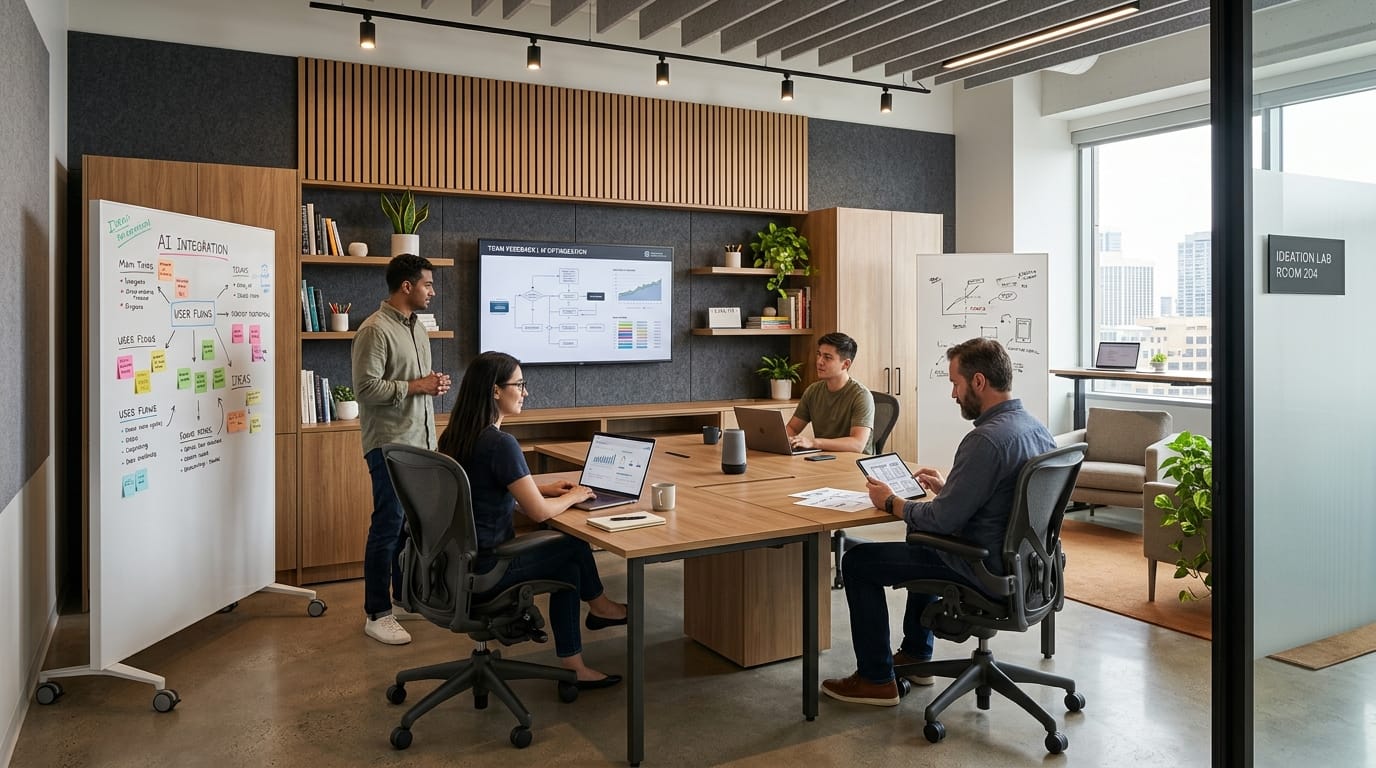
AI tools can process information quickly, but people still need attention, judgment, and creativity. A room that overwhelms users with too many screens, alerts, wires, and hard surfaces can reduce the quality of thinking. Keep the design clean, comfortable, and organized so the team can focus on decisions instead of distractions.
How to Build an AI Collaboration Room Without Starting Over
You do not need a full renovation to create a better AI collaboration room. Start by reviewing the room you already have. Watch how people use it during a real meeting. Do they move chairs around? Do they complain about outlets? Is the screen hard to see? Is the room too loud? Are people uncomfortable after 30 minutes? These clues show which furniture upgrades matter first.
For many offices, the first upgrade should be power and layout. Add a better table with cable access, improve charging points, and make sure laptop users have enough space. Next, improve seating. If chairs are old, stiff, or unsupportive, the room will not feel productive no matter how advanced the software is.
After that, fix visibility and sound. Adjust screen placement, add acoustic materials, and use mobile whiteboards or boards for shared thinking. If the room serves different teams, choose furniture that can move. Fixed furniture may look clean, but movable pieces often serve modern work better.
Home office users can apply the same concept on a smaller scale. A compact AI collaboration corner might include a height-appropriate desk, ergonomic chair, monitor, webcam, task light, cable tray, and a small board for notes. If you work solo but use AI tools heavily, the guide AI-Ready Home Office Setup in 2026 is a helpful internal follow-up.
Start With the Work, Then Choose the Furniture
Do not buy furniture just because it looks modern. First, define what the room needs to do. Will it support client calls, training, AI workshops, design reviews, writing sessions, research, or team planning? Once the purpose is clear, the furniture choices become easier. A room for workshops needs movable tables. A room for video calls needs better sightlines and acoustics. A room for focused AI research needs ergonomic seating and screen comfort.
The best AI collaboration rooms are practical, not flashy. They help teams share ideas, review information, stay comfortable, and move between digital and physical work. They also make the office feel more useful at a time when many employees expect the workplace to offer something better than a desk they could use at home.
As AI becomes part of daily work, the physical office should adapt. Teams need rooms where technology supports conversation, not rooms where technology creates more friction. Flexible tables, supportive chairs, clean cable management, acoustic comfort, smart storage, and proper screen placement can turn a basic meeting room into a more useful collaboration space.
In 2026, office furniture is no longer just about filling a room. It is about shaping how people think, connect, and solve problems. Build AI collaboration rooms that respect the people using them, and the technology will feel less like a distraction and more like a natural part of better teamwork.