
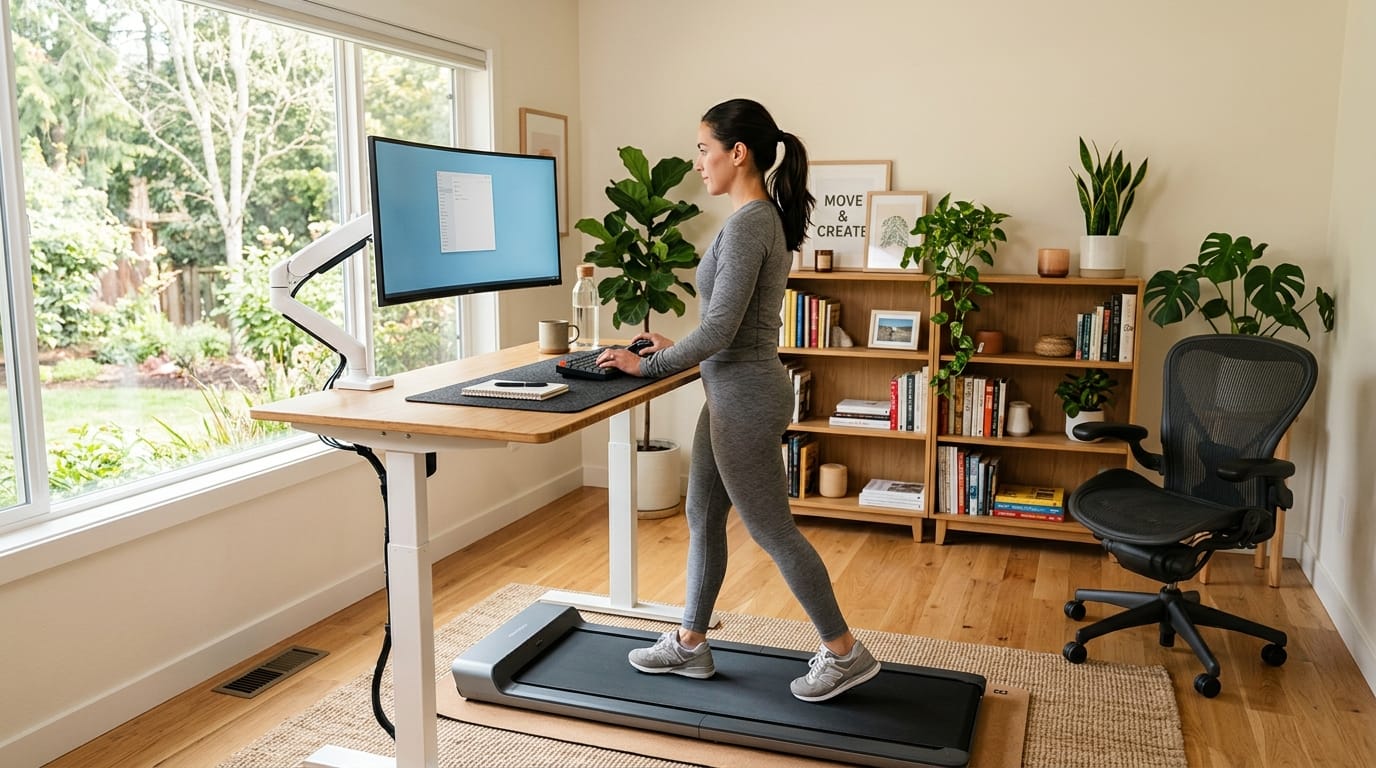
An active workstation setup is becoming one of the most practical office furniture trends in 2026 because people no longer want a workspace that forces them to sit still all day. Whether you work from home, manage a hybrid office, or spend long hours at a desk, your furniture should support movement, comfort, and focus without making your workday complicated.
This topic fits well with existing Compulsive Painball guides like Standing Desks vs. Traditional Desks, Ergonomic Office Chair Setup, and AI-Ready Home Office Setup in 2026. If your readers are already improving posture, desk layout, and productivity, an active workstation setup is the next smart upgrade.
Why Active Workstation Setup Is Trending in 2026
Workplace design in 2026 is moving toward furniture that adapts instead of furniture that stays fixed. Hybrid work has changed the purpose of the office. Home offices also need to be more efficient because many people do not have a dedicated room for work. A good setup must now support focused work, online meetings, posture changes, storage, cables, and movement in the same small area.
An active workstation setup does not mean you need to walk all day or replace your chair completely. That is unrealistic and usually uncomfortable. Instead, it means designing a workspace that makes small posture changes easy. You can sit, stand, stretch, step, lean, and move without interrupting your tasks.
Research from the Centers for Disease Control and Prevention has shown that sit-stand devices can help reduce sitting time and may support comfort during the workday. That does not mean a standing desk is magic, but it does show why movement-friendly furniture has become more than just a style trend. You can read more from the CDC’s workplace sit-stand research.
What an active workstation really includes
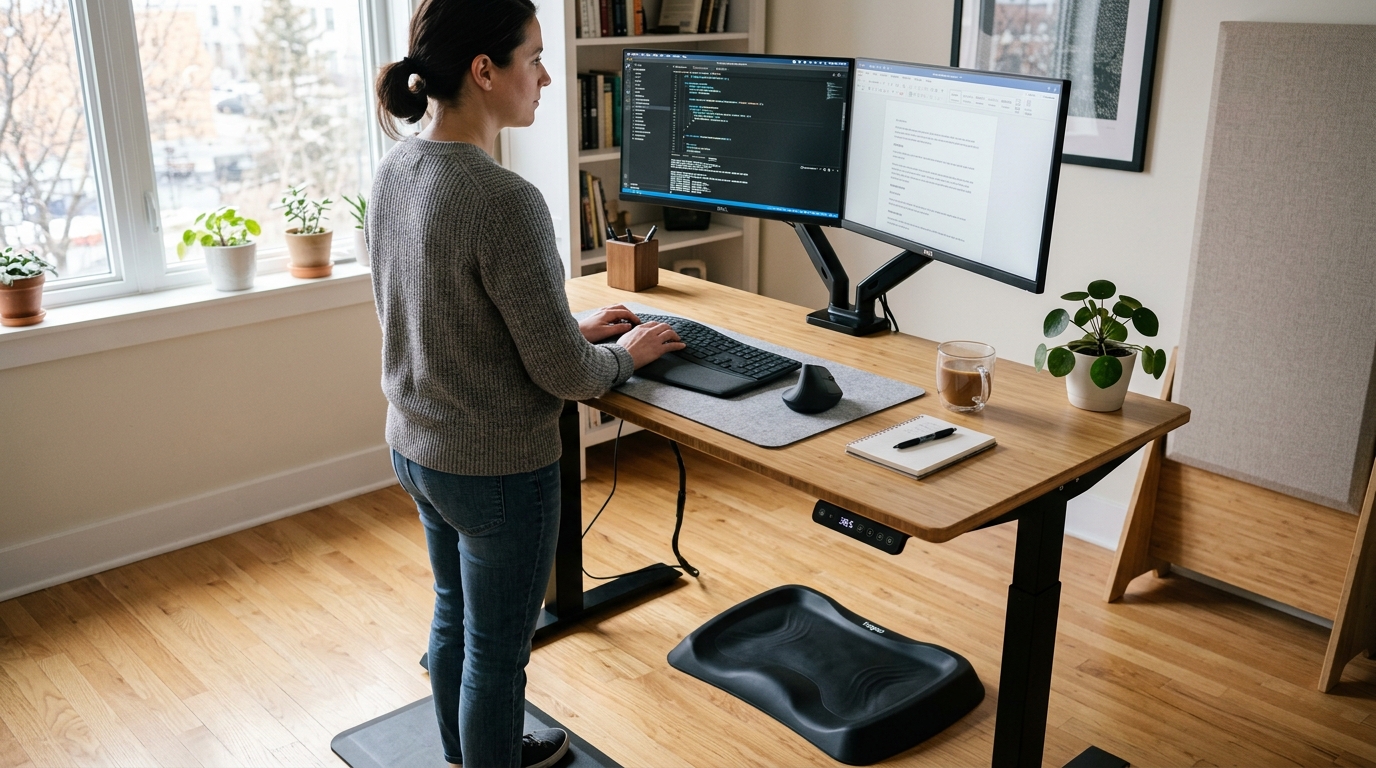
The core of an active workstation setup is not one product. It is the combination of furniture and habits that helps you avoid staying in one position for too long. The most common pieces include a height-adjustable desk, supportive ergonomic chair, monitor arm, keyboard tray, anti-fatigue mat, footrest, walking pad, and storage that keeps the floor clear.
For small home offices, you may not need every item. A simple sit-stand desk, adjustable chair, and monitor riser can already make a big difference. For larger offices, modular desks and mobile storage help teams reconfigure areas for focus, collaboration, and movement. This connects naturally with Flexible Office Furniture for Hybrid Work.
1. Start with a sit-stand desk before buying extras
The desk is the foundation. If the desk height is wrong, everything else becomes harder to fix. A sit-stand desk lets you alternate between sitting and standing throughout the day, which is more practical than forcing yourself to stand for hours. Look for stable legs, smooth height adjustment, memory presets, enough surface depth, and a weight capacity that supports your monitors and accessories.
2. Add a walking pad only if your work style supports it
Walking pads are popular, but they are not right for every task. They work best during light activities like reading, checking email, attending listen-only meetings, or reviewing documents. They are usually less useful for detailed design work, spreadsheet editing, writing, or tasks that require precise mouse control.
If you add a walking pad, keep the speed low. The goal is gentle movement, not a workout. You also need enough clearance, safe cable placement, and a storage spot when the walking pad is not in use. A walking pad should improve the room, not become another bulky object that creates clutter.
How to choose furniture that supports movement
The best active workstation setup feels natural. You should not need to think too hard every time you change position. This is where adjustable furniture matters. Your chair, desk, monitor, keyboard, and lighting should move with your body instead of forcing your body to adjust to the room.
Start with your chair. Even in an active setup, you will still sit. Choose a chair with adjustable seat height, lumbar support, armrests, and seat depth when possible. Your feet should rest flat on the floor or on a footrest. Your elbows should stay near a relaxed 90-degree angle. Your screen should be high enough that you are not constantly bending your neck.
3. Match your chair, desk, and monitor height
Many people buy ergonomic furniture but never adjust it correctly. That is why matching heights is so important. When seated, your desk should allow relaxed shoulders and neutral wrists. When standing, your keyboard and mouse should still stay around elbow height. Your monitor should remain close to eye level in both positions.
A monitor arm is one of the most useful upgrades because it lets you fine-tune screen height and distance. It also frees up desk space. If you use a laptop, avoid working directly on the laptop screen all day. Use a stand with an external keyboard and mouse so your neck and shoulders are not locked into a poor position.
How to Build an Active Workstation Setup Without Wasting Money
The biggest mistake is buying trendy products before identifying the real problem. If your back hurts because your chair has no support, a walking pad will not solve it. If your neck hurts because your monitor is too low, a premium desk will not fix the screen angle by itself. Start with the pain points, then buy the furniture that directly solves them.
For most people, the best order is simple: adjust your current chair and monitor first, upgrade to a sit-stand desk second, add lighting and cable management third, then consider movement accessories like an anti-fatigue mat or walking pad. This keeps your active workstation setup practical and budget-friendly.
A simple movement routine for the workday
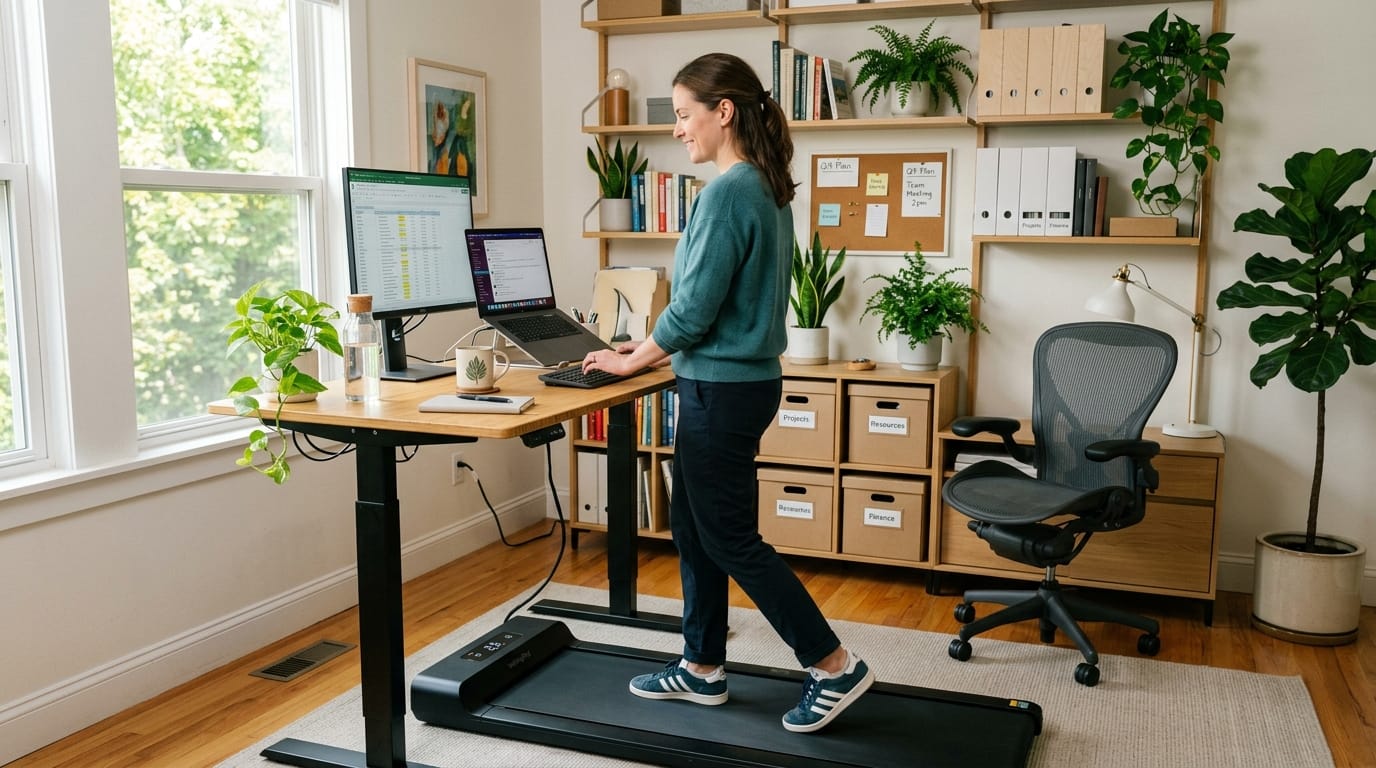
Furniture helps, but habits make the setup work. Try sitting for 30 to 45 minutes, standing for 10 to 15 minutes, and taking a short walk or stretch break when changing tasks. You do not need a perfect schedule. You just need regular position changes that prevent your body from getting stuck.
Use your desk presets to remove friction. Set one height for seated work and one for standing work. Keep your anti-fatigue mat nearby, not hidden in a closet. Place your walking pad where it can slide under the desk quickly. The easier the movement is, the more likely you will actually do it.
4. Keep the setup clean, safe, and easy to use
An active workstation setup should not look messy or feel risky. Use cable trays, clips, and power strips to keep cords away from your feet. Choose storage with wheels if you often reconfigure the space. Keep heavy items stable and avoid overloading adjustable desks.
An active workstation setup in 2026 is not about chasing every new gadget. It is about creating an office that supports real human behavior. People sit, stand, lean, reach, walk, stretch, focus, talk, and reset throughout the day. Your furniture should make those actions easier.
Start with the basics: a supportive chair, a properly adjusted desk, a screen at the right height, and enough space to move safely. Then add upgrades only when they solve a real problem. When done correctly, an active workstation can make your office feel more comfortable, more flexible, and more ready for the future of work.