

Circular office furniture is becoming one of the smartest workspace trends in 2026 because businesses, home office users, and hybrid teams now think beyond “buy new, use it, throw it away.” A modern office does not need only brand-new desks, chairs, cabinets, and tables to look professional. Refurbished, reused, repaired, and responsibly sourced pieces can still create a workspace that feels polished, comfortable, and future-ready.
The idea is simple: instead of treating office furniture as disposable, circular design keeps products and materials in use for as long as possible. Businesses can buy refurbished ergonomic chairs, choose modular desks with replaceable parts, reupholster seating, reuse storage, or work with suppliers that offer take-back and resale programs. These choices can reduce waste while keeping the office clean, modern, and professional.
This topic fits naturally with existing Compulsive Painball guides such as Ergonomic Office Chair Setup, Sit-Stand Desks for Hybrid Work, and AI-Ready Home Office Setup in 2026. Circular thinking does not replace ergonomics, productivity, or style. It strengthens them by asking whether each piece can last longer, adapt better, and create less waste.
Why Circular Office Furniture Is Trending in 2026
Office design has changed quickly over the last few years. Hybrid work, downsized offices, home workstations, coworking spaces, and flexible teams have all changed how people use furniture. Many businesses now have extra desks, mismatched chairs, unused meeting tables, or storage pieces that no longer fit daily work. Instead of sending those items to waste, circular office furniture encourages a better question: what can we reuse, repair, refresh, or repurpose?
This approach makes sustainability practical instead of vague. A circular office does not only rely on products with “eco” labels. It looks at the full life of each item. Can the chair accept new upholstery? Can the desk frame support a new top? Can the supplier provide replacement parts? Can the team move storage to another zone? Can the company resell, donate, repair, or return furniture instead of throwing it away?
What circular office furniture actually means

Circular office furniture includes desks, chairs, tables, cabinets, panels, and workspace accessories that stay useful for longer. This can include refurbished furniture, second-hand office pieces, modular furniture, recycled materials, and products with repairable parts. The goal is to reduce waste while still supporting comfort, function, and professional appearance.
The Ellen MacArthur Foundation explains that a circular economy keeps products and materials in circulation through maintenance, reuse, refurbishment, remanufacturing, and recycling. Workspaces can apply that principle directly through smarter furniture choices. You can read more from the Ellen MacArthur Foundation’s circular economy principles.
Refurbished does not mean low quality
Some people assume refurbished furniture looks old, damaged, or unprofessional. That is not always true. A high-quality refurbished task chair can often outperform a cheap new chair. A reused solid desk can last longer than a budget flat-pack option. Reupholstered seating can match a new office color palette while keeping the original frame in use. The key is to inspect condition, comfort, adjustability, and warranty before buying.
Reuse works best when pieces follow a plan
Random second-hand furniture can make a workspace feel messy. Intentional reuse can make it feel curated. Choose a consistent color palette, similar wood tones, matching chair styles, or repeated storage finishes. Even when pieces come from different sources, the space can still look professional when you follow a clear visual plan. Circular design should feel smart, not accidental.
Why businesses are choosing sustainable procurement
Companies now face more pressure to make smarter decisions about waste, materials, cost, and long-term value. Cheap furniture can create hidden expenses through replacements, downtime, disposal, delivery, assembly, and employee discomfort. Circular procurement looks at the total value of furniture, not just the lowest upfront price.
For example, a refurbished ergonomic chair with replaceable parts may offer better value than a low-cost chair that becomes uncomfortable after six months. A modular sit-stand desk may adapt better than a fixed desk that only works in one layout. A reused cabinet may solve a storage problem without requiring new manufacturing. These decisions support both budget control and environmental responsibility.
Durability is part of sustainability
Sustainable office design does not depend only on recycled materials. Durability matters. When a product lasts longer, performs better, and accepts repairs, it reduces the need for constant replacement. Buyers should look beyond surface style and check frame quality, adjustment mechanisms, upholstery condition, desk stability, and replacement part availability.
How to Create a Professional Circular Workspace
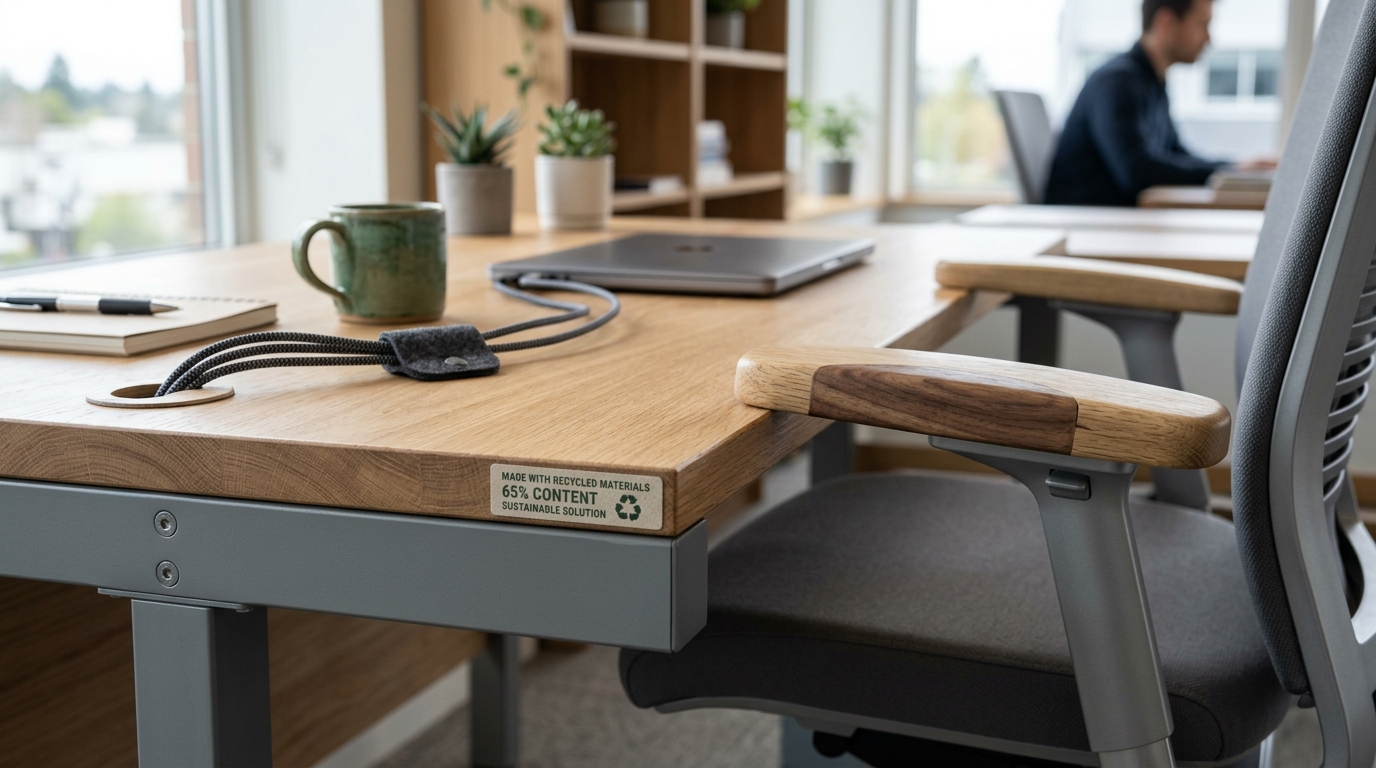
Building a circular workspace does not mean filling the office with mismatched leftovers. It means combining smart buying, careful reuse, and practical upgrades. Start by auditing what you already have. Which desks still feel sturdy? Which chairs only need new casters or arm pads? Could the cabinets move to a better location? Which tables could become shared work surfaces? Before buying new, identify what can still serve a purpose.
Next, decide where new or refurbished purchases will make the biggest difference. For most offices, the chair should come first because comfort affects posture, focus, and daily productivity. A reused desk may work well, but a poor chair can create back, neck, or shoulder discomfort. Pair circular buying with ergonomic guidance by reviewing Ergonomic Office Chair Setup.
What to buy refurbished and what to buy new
Some office pieces work very well as refurbished or reused purchases. Ergonomic chairs, storage cabinets, meeting tables, side tables, monitor arms, shelving, and acoustic screens can often support a second life if they remain in good condition. Desks can also work well, especially when the frame feels stable and the surface still looks clean. For sit-stand desks, check the motor, controller, weight capacity, stability, and cable management before buying refurbished.
Other items may still deserve a new purchase, especially when they involve safety, hygiene, electrical components, or specialized fit. Heavily worn chairs, unstable desks, damaged electrical desk frames, and poor-quality seating may not justify repair. Circular design does not mean keeping everything forever. It means useful pieces stay in circulation, while unsuitable pieces leave the workspace responsibly.
Noise control can also support a circular strategy. Reused acoustic panels, refurbished privacy screens, and movable dividers can improve focus without building new walls. This connects well with Acoustic Office Solutions 2026. A circular workspace should support concentration as much as sustainability.
Match sustainability with comfort, focus, and style
The best circular office does not feel like a compromise. It still supports good posture, clear work zones, calming materials, and a professional visual identity. Add plants, natural finishes, soft lighting, and uncluttered storage to make reused furniture feel intentional. For inspiration, connect this approach with Biophilic Office Design in 2026 and Neuroinclusive Office Design in 2026.
A simple furniture inventory can also help. Keep notes on furniture condition, supplier details, repair options, material information, and warranty coverage. This makes future upgrades easier because you know what you can repair, resell, donate, or reconfigure later. Circular planning works better when the office tracks what it already owns.
In conclusion, circular office furniture is a practical 2026 trend because it combines sustainability, cost control, and professional design. Refurbished chairs, reused desks, modular storage, repaired seating, and responsibly sourced materials can create a workspace that looks modern without wasting useful products. The best approach is not to buy less comfort. It is to buy smarter.
A professional office does not need to be brand-new from top to bottom. It needs to be functional, comfortable, organized, and aligned with the way people actually work. Circular furniture helps you reach that goal while reducing unnecessary waste. Start with what you already own, repair what still has value, buy refurbished where it makes sense, and choose new pieces carefully when they truly improve the workspace.