
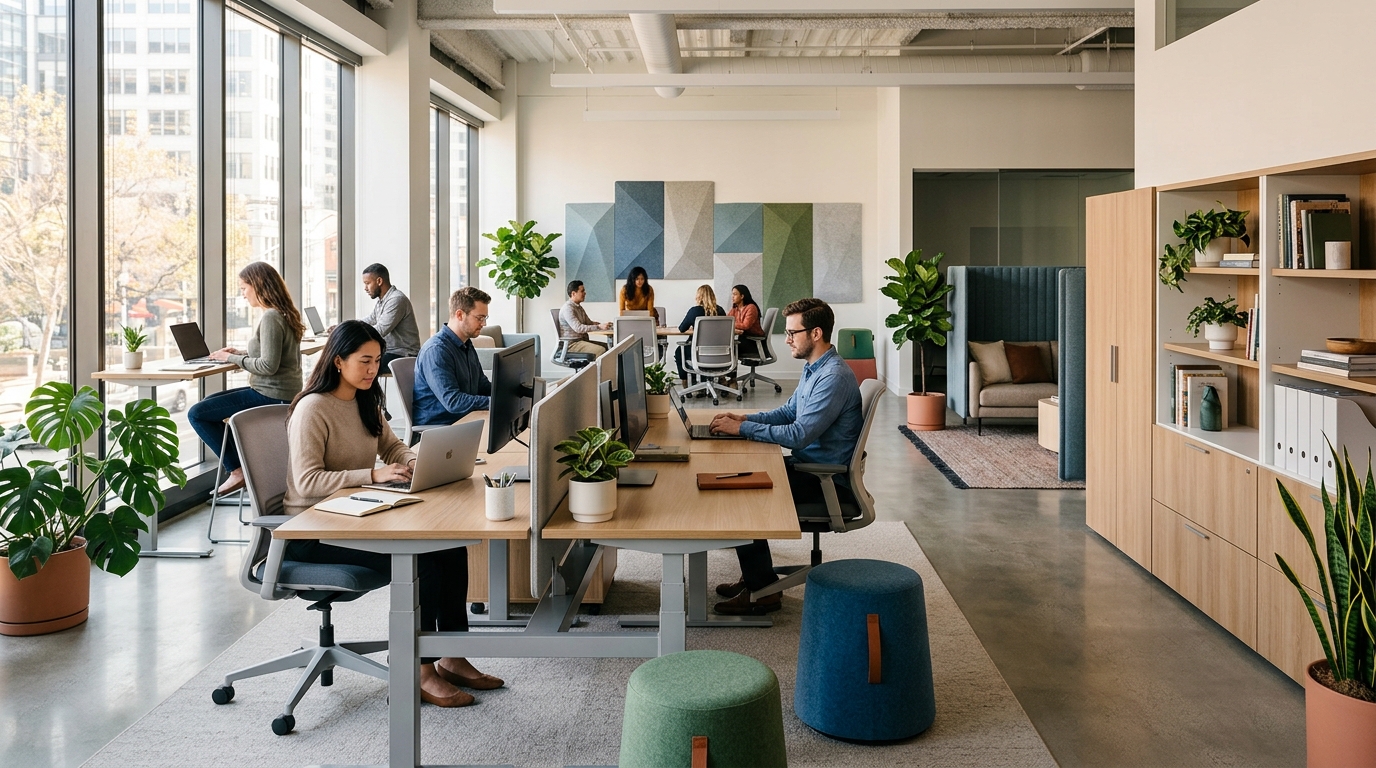
Modular office furniture is becoming one of the most useful workspace upgrades in 2026 because offices are no longer built for one fixed way of working. Some days require focused solo work. Other days need collaboration, video calls, training sessions, client meetings, or quiet recharge areas. A rigid office layout can quickly feel outdated, but a modular setup gives you room to adjust without replacing everything.
The best part is that modular design is not only for large corporate offices. It can work in a small home office, a shared studio, a startup workspace, or a growing business that cannot afford a full renovation every time the team changes. Instead of thinking about office furniture as permanent pieces locked into one layout, modular planning treats desks, chairs, storage, dividers, and accessories as flexible tools.
This topic connects naturally with existing Compulsive Painball guides such as AI-Ready Home Office Setup in 2026, Sit-Stand Desks for Hybrid Work, and Acoustic Office Solutions 2026. All of these trends point to the same idea: a good workspace should support real work patterns, not just look good in photos.
Why Modular Office Furniture Is Trending in 2026
The rise of hybrid work changed what people expect from offices. A desk is no longer just a surface for a laptop. It may need to support focused writing in the morning, video meetings in the afternoon, and shared project work later in the day. A meeting area may need to become a training corner. A lounge may need to double as an informal brainstorming space. This is where modular office furniture becomes valuable.
Modular furniture helps people avoid the common mistake of designing for one perfect scenario. Work changes. Team sizes change. Technology changes. Even home office needs can shift when a partner works from home, kids need a study corner, or a side business grows. A flexible setup gives you more options without forcing you to buy a completely new desk, new chair, and new storage system every year.
Flexible furniture supports hybrid work better
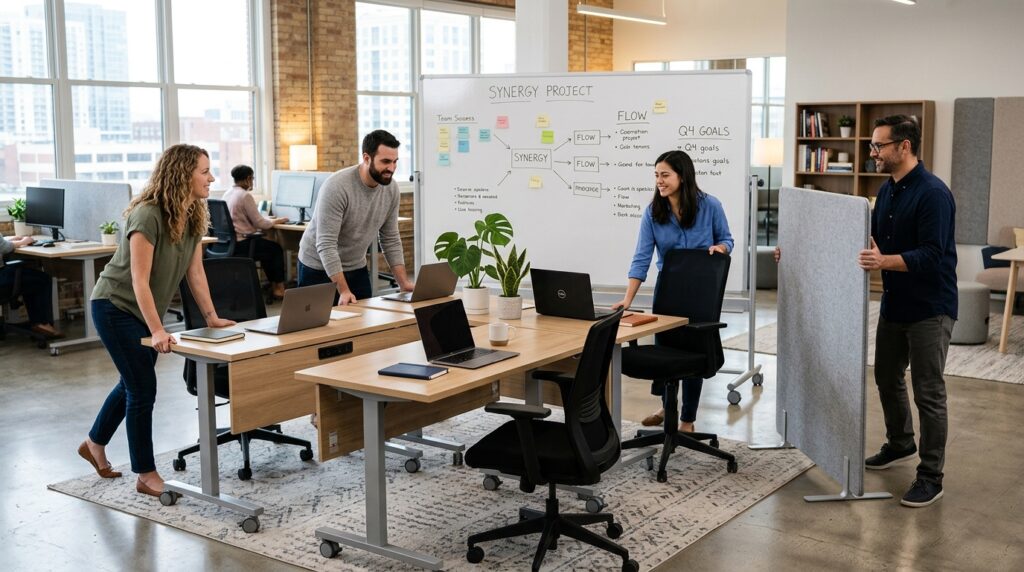
Hybrid work requires more than a laptop and a Wi-Fi connection. It needs spaces that can shift between different tasks. A modular desk system can support a solo workstation during deep work, then reconfigure into a shared surface for planning. Lightweight chairs can move between meeting zones and focus areas. Mobile storage can follow the user instead of being fixed in a corner.
This is especially helpful for offices where not every employee comes in on the same day. Instead of assigning every person a permanent desk that may sit empty half the week, businesses can create flexible neighborhoods. These areas can support focus, collaboration, calls, and drop-in work. For home offices, the same concept applies on a smaller scale: one room can serve work, study, admin, and creative tasks when the furniture is chosen carefully.
Moveable desks make small spaces work harder
In small offices, every square foot matters. A moveable desk, folding table, nesting chair, or rolling storage unit can make a compact workspace feel less trapped. You can open the room for movement, pull pieces together for collaboration, or create separation when focus is needed. This is more practical than buying oversized furniture that looks impressive but limits how the room can be used.
Modular storage reduces clutter without locking the layout
Storage is often the hidden problem in office design. Papers, chargers, notebooks, cables, office supplies, bags, and devices can quickly take over a room. Modular storage helps because it can be moved, stacked, expanded, or reassigned. Instead of one large cabinet that controls the layout, smaller storage pieces can adapt as the workspace changes.
Modular design works best with ergonomics
Flexibility should never come at the cost of comfort. A workspace that changes easily but causes back, neck, wrist, or shoulder pain is not a smart setup. The best modular office furniture still supports healthy posture, proper monitor height, good chair adjustment, and easy access to tools. A flexible office should help people work better, not force them into awkward positions.
Start with the basics: a supportive chair, a desk at the right height, a monitor positioned correctly, and enough space for keyboard and mouse movement. Then build modular features around that foundation. Readers who need a step-by-step comfort guide can review Ergonomic Office Chair Setup.
Sit-stand options can be part of a modular plan
Sit-stand desks fit naturally into modular planning because they support movement throughout the day. But the desk should still match the room, cable needs, monitor setup, and storage plan. A sit-stand desk that blocks traffic flow or has poor cable management can create new problems. For more buying guidance, link this section to Sit-Stand Desks for Hybrid Work.
How to Build a Flexible Workspace Without a Full Renovation
You do not need to replace every piece of furniture to create a more flexible office. The smarter approach is to identify what is fixed, what is moveable, and what is causing daily friction. Fixed elements may include walls, windows, doors, power outlets, and heavy furniture. Moveable elements may include desks, chairs, storage, lamps, dividers, whiteboards, plants, and accessories.
Before buying anything, watch how the space is actually used. Where do people take calls? Where does clutter collect? Which seats are avoided? Corner feels too noisy? Which surface becomes a dumping zone? These answers help you choose modular office furniture that solves real problems instead of adding more pieces to an already crowded room.
Start with zones instead of individual furniture pieces
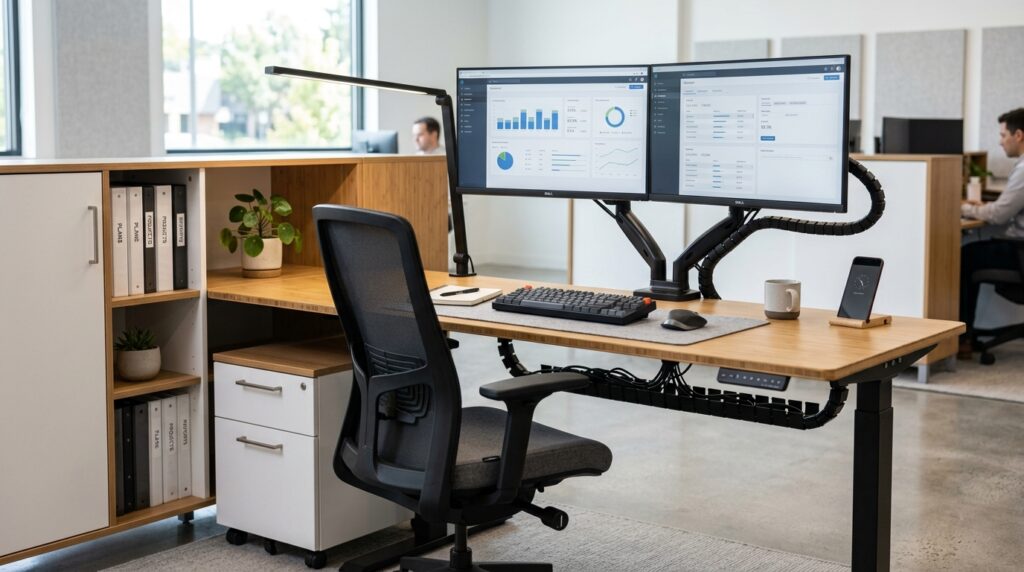
A flexible workspace works better when it is planned by activity. Create a focus zone for deep work, a collaboration zone for team tasks, a call zone for video meetings, and a storage zone for shared supplies. In a home office, these zones may be tiny, but the idea still works. One side of the desk can support computer work, while a small shelf or rolling cart supports documents, printer supplies, or creative materials.
Acoustic comfort should also be part of the plan. Modular dividers, soft seating, rugs, curtains, acoustic panels, and layout changes can reduce noise without a full construction project. If sound is a major issue, readers can visit Acoustic Office Solutions 2026.
Use lightweight dividers to create privacy when needed
Privacy does not always require permanent walls. Lightweight dividers, shelving units, curtains, plant screens, and acoustic panels can create temporary separation. This is useful for shared offices, small businesses, and home workspaces where one room has multiple purposes. The goal is not to isolate everyone. The goal is to give people control over focus and distraction.
Some workers also need calmer environments because of sensory sensitivity, focus challenges, or stress. A modular office can help by offering quieter corners, softer lighting, reduced visual clutter, and more choice in where people work. This connects well with Neuroinclusive Office Design in 2026.
Natural materials and plants can also soften a modular setup so it does not feel cold or temporary. A flexible workspace can still feel warm, professional, and inviting. For this reason, pair modular furniture planning with ideas from Biophilic Office Design in 2026.
For a strong external reference on workplace direction, readers can explore the Gensler Global Workplace Survey 2026, which highlights how modern offices need to support different work modes, collaboration, focus, learning, and connection.
In conclusion, modular office furniture is one of the smartest upgrades for 2026 because it gives workspaces room to evolve. Instead of locking yourself into one layout, you can build a space that adapts to focus work, meetings, hybrid schedules, storage needs, and comfort. Start small, solve real friction points, choose ergonomic basics, and add flexible pieces that can move as your work changes.
A better office does not always require demolition, expensive renovations, or a complete furniture replacement. Sometimes the most effective upgrade is choosing pieces that can shift, support, divide, store, and adapt. That is the real value of modular furniture: it helps your workspace keep up with the way you actually work.