
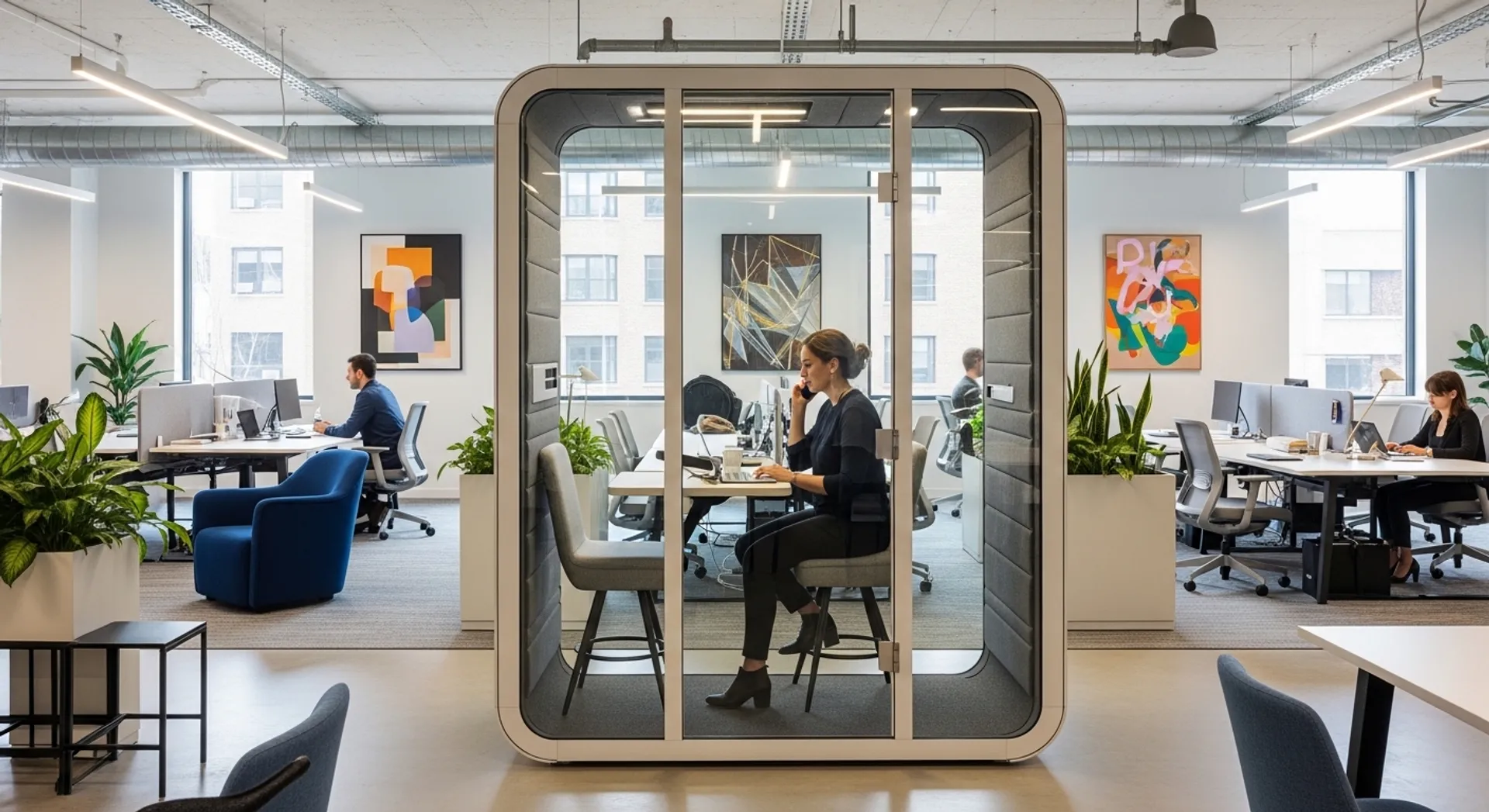
If your workspace looks great but sounds like a busy café, you’re not imagining it—noise has become one of the biggest productivity killers in modern work environments. That’s exactly why acoustic office solutions 2026 is a trending topic right now. Open plans are still common, hybrid work is still real, and more teams are trying to squeeze calls, meetings, and deep-focus work into the same space.
The good news: you don’t need to rebuild your office to fix acoustics. With a few targeted upgrades—panels, pods, soft finishes, and smarter layout choices—you can cut distractions fast and make your workspace feel calmer, more professional, and more usable.
Why acoustic office solutions are trending in 2026
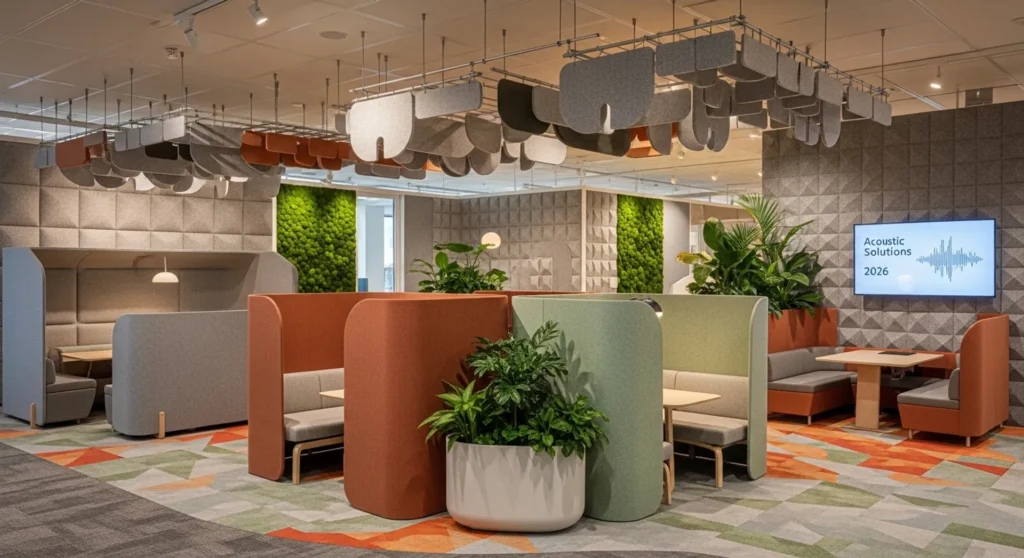
Multiple 2026 workplace trend reports are pointing in the same direction: offices are becoming more modular, more human-centered, and more focused on wellbeing—while privacy and acoustics are now treated as “must-haves,” not optional extras. Acoustic panels, sound-absorbing furniture, and privacy pods/booths keep showing up as key 2026 solutions.
- Hybrid work reality: more calls, more video meetings, more “heads-down” work happening alongside collaborative zones.
- Open layouts still dominate: but people need spaces for concentration and private conversations.
- Wellbeing + performance: sustained noise increases fatigue and makes even short tasks feel harder.
Industry coverage has specifically called out acoustic privacy, pods, and sound-absorbing elements as major 2026 furniture and workplace trends. IE-UK’s 2026 trend overview and other 2026 workplace trend summaries consistently highlight acoustics and modular “focus zones” as core upgrades.
First, understand the 3 types of office noise
Before buying anything, identify what’s actually bothering you. Most noise problems fall into three categories:
- Airborne noise: voices, calls, keyboard clacking, printer sounds.
- Impact noise: footsteps, chair movement, door slams.
- Echo/reverb: the “empty room” effect where sound bounces and lingers.
Acoustic upgrades work best when you match the solution to the noise type. Panels and soft finishes reduce echo. Pods handle airborne voice noise. Rugs and pads reduce impact noise. Layout fixes prevent sound from traveling in the first place.
The fastest wins: 6 upgrades that actually reduce noise
1) Add acoustic wall panels (high impact, low drama)
Acoustic panels are one of the quickest ways to reduce echo and soften harsh sound reflections. They’re especially effective in rooms with lots of hard surfaces: glass, drywall, tile, and bare wood.
Where to place panels:
- Behind the main desk or workstation area
- On the wall opposite a speaker-heavy zone (calls, meeting corner)
- Near the “reflection points” (where sound bounces back strongest)
Quick tip: If you can only afford a few panels, place them where voices bounce most—usually behind and beside the person speaking on calls.
2) Use privacy pods / phone booths for calls and deep work
If your space has frequent meetings or calls, a privacy pod is the most direct fix. It creates a dedicated “quiet room” without building walls. This is why phone booths and pods keep showing up in 2026 workplace trend discussions—open offices need private call space.
Pods are ideal for:
- Sales calls and customer support
- Video meetings
- Deep-focus tasks (writing, coding, analysis)
- Confidential conversations
Reality check: Pods aren’t cheap, but they often replace the need for multiple small meeting rooms. If your team fights over quiet space, pods can be a smarter long-term investment than adding more desks.
3) Add soft surfaces: rugs, curtains, upholstered furniture
Acoustics loves softness. Hard surfaces reflect sound; soft surfaces absorb it. This is the “budget-friendly” layer that many teams skip—and it’s a mistake.
- Rugs: reduce impact noise from footsteps and rolling chairs.
- Upholstered seating: absorbs sound and reduces “tinny” room reflections.
- Curtains / fabric dividers: help soften large reflective surfaces (especially glass).
If you want an easy win for a home office, start with a rug and a fabric chair—then add panels later if needed.
4) Upgrade partitions: moveable screens and acoustic dividers
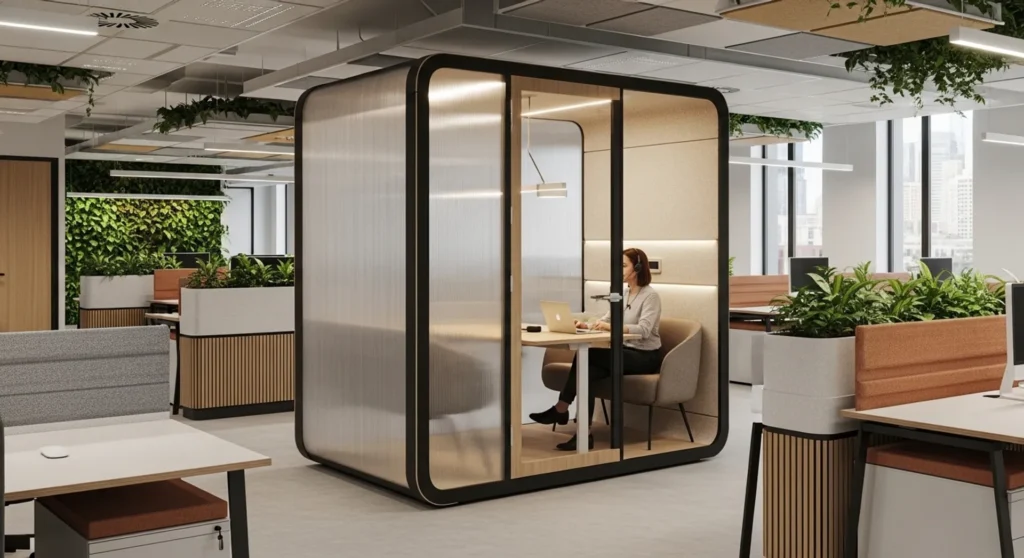
In 2026, modular layouts are trending because businesses want spaces that can change quickly. That same modular approach works for sound. Moveable partitions break up sound paths, reduce direct voice travel, and create “zones” without construction.
Best use cases:
- Separating call-heavy desks from focus-heavy desks
- Creating a small “quiet corner” in a shared room
- Reducing noise bleed between desks in tight layouts
5) Fix the layout: stop pointing noisy zones at quiet zones
This is where a lot of offices fail: they buy panels, but the layout still funnels sound directly into workstations.
Layout rules that work:
- Keep printers + break areas away from focus desks
- Don’t place desks facing each other if both people take calls
- Use shelves, plants, and partitions to break long “sound corridors”
Even a small change—like rotating two desks—can reduce direct voice travel.
6) Don’t ignore ergonomics while you fix acoustics
Here’s the trap: people build a “quiet nook” that’s uncomfortable, poorly lit, and awkward for posture. That creates a new problem: physical fatigue.
Use basic workstation guidance from OSHA to keep your setup comfortable while you optimize the space. OSHA’s computer workstation eTool is a solid authority reference for positioning and comfort basics.
Buying guide: what to look for in acoustic products
Acoustic panels
- Thickness and density: thicker isn’t always better, but ultra-thin panels can be mostly decorative.
- Coverage: aim for strategic coverage near reflection points, not random placement.
- Fire and safety ratings: especially for business spaces.
Privacy pods
- Ventilation: pods get warm fast—good airflow matters.
- Lighting: built-in lighting should be comfortable for calls.
- Power: outlets and USB are non-negotiable.
Partitions and dividers
- Stability: wobble = annoyance.
- Height: higher blocks sound paths better, but consider sightlines and safety.
- Mobility: rolling partitions are useful for hybrid zones.
“Do I need panels AND a pod?” A simple decision rule
- If your main problem is echo and general loudness → start with panels + soft surfaces.
- If your main problem is calls and privacy → prioritize a pod/booth or a dedicated quiet room.
- If your main problem is everything → do panels + layout fixes first, then add a pod if calls still disrupt focus.
Recommended internal links (keep visitors clicking)
To strengthen SEO and reduce bounce, link this post to your existing content:
- Ergonomic Office Chair Setup: Step-by-Step to Reduce Back and Neck Pain
- Office Lighting Tips That Boost Focus and Reduce Fatigue
- Standing Desks vs. Traditional Desks: What’s Better for You?
- Top Office Desk Styles: Which One Suits You Best?
Final thoughts: acoustics is the upgrade people feel immediately
Most office upgrades are slow-burn improvements. Acoustic upgrades aren’t. When you reduce noise and echo, the workspace feels calmer instantly—and work feels easier. That’s why acoustic office solutions 2026 is trending: it’s one of the most practical, measurable improvements you can make in a modern office or home setup.
Start simple: soften the room, place panels where they matter, fix the layout, and protect a real focus zone. If calls are still hijacking the space, add a pod or booth and stop trying to make “open office” do a job it was never built to do.